
Cross-Border Crypto Payments
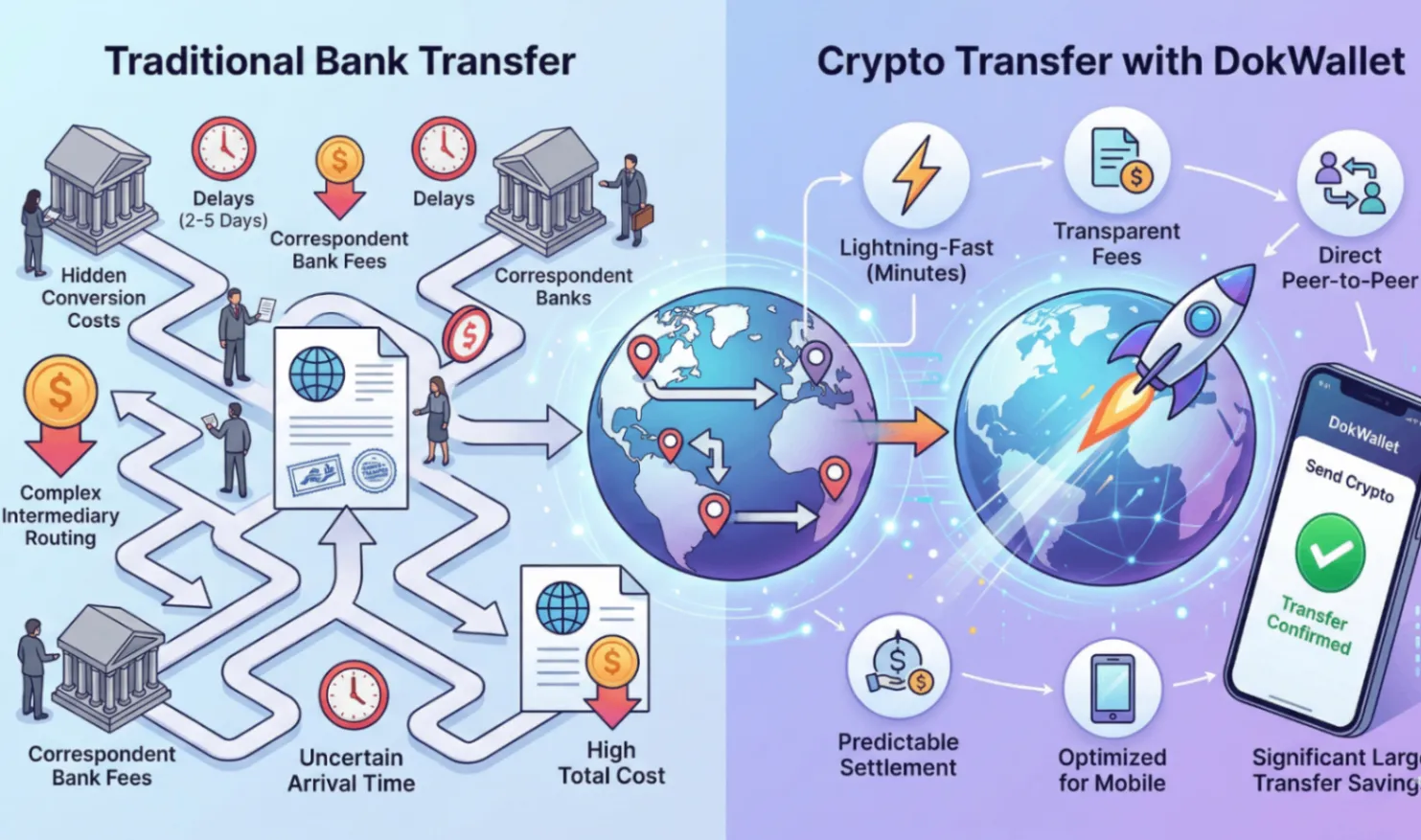
Sending money across international borders remains one of the most friction-laden, expensive, and slow processes in modern finance. Despite decades of technological advancement in virtually every other area of financial services, international wire transfers still routinely take multiple business days, charge fees that can represent a significant percentage of the amount being sent, and require navigating correspondent banking relationships that add layers of complexity and cost.
Cryptocurrency offers a fundamentally different approach. Cross-border crypto payments are processed on blockchain networks that operate continuously, without weekends or banking holidays, with fees that bear no relationship to the geographic distance the transaction must travel or the amount being sent. For individuals, freelancers, businesses, and anyone who regularly sends or receives money across borders, this represents a meaningful and practical improvement.
Why Traditional Cross-Border Payments Fall Short
International bank transfers typically route through a network of correspondent banks, each of which may add fees and processing time. A transfer from Europe to Southeast Asia may pass through two or three intermediary banks before reaching the recipient, with each deducting fees and adding delays. The sender often does not know how much will arrive or precisely when it will get there.
Currency conversion adds another layer of cost. Exchange rates offered by banks and traditional money transfer operators are typically significantly less favourable than the interbank rate, representing a hidden additional fee on every cross-border transaction that many senders fail to account for in advance.
Transfer times vary considerably. Standard international wire transfers can take two to five business days. In some corridors, particularly to developing markets, delays can extend significantly further.
How Crypto Solves the Cross-Border Payment Problem
Cryptocurrency operates on blockchain networks that have no concept of national borders. A transaction from a wallet in one country to a wallet in another country is processed by the same network, subject to the same fees, and confirms in the same timeframe as a transaction between two wallets in the same city.
Blockchain transactions settle in minutes rather than days. There is no correspondent banking chain, no intermediary holding funds during processing, and no arbitrary delay related to business hours or geographic routing. The DokWallet cross-chain crypto wallet makes initiating these transfers straightforward from any mobile device.
Fees on blockchain networks are determined by network activity, not by the amount being sent or the distance between sender and recipient. Sending a large amount internationally in crypto typically costs the same as sending a small amount, which represents significant savings for large international transfers.
Stablecoins — The Practical Solution for Cross-Border Payments
While Bitcoin and Ethereum are the most widely known cryptocurrencies, stablecoins have emerged as the most practical choice for cross-border payment use cases. Stablecoins are cryptocurrencies designed to maintain a stable value, typically pegged to the US dollar.
The price volatility that characterises most cryptocurrencies creates obvious challenges for payment use cases. If the value of your payment asset changes significantly before the recipient converts it, the effective amount received differs from the intended amount. Stablecoins eliminate this problem entirely by maintaining a stable value throughout the transaction.
USDT and USDC are the most widely used stablecoins for cross-border payments, with trillions of dollars in transaction volume processed annually. They combine the settlement speed and low cost of blockchain transactions with the price stability required for practical payment use cases. DokWallet supports stablecoin management and transfers across multiple blockchain networks, making it a comprehensive stablecoin payment app for cross-border payment flows.
Real-World Use Cases for Cross-Border Crypto Payments
Freelancers and remote workers who provide services to international clients frequently face delays and fees when receiving payment through traditional channels. Receiving payment in cryptocurrency, particularly stablecoins, eliminates these barriers and ensures that payment arrives quickly at its full intended value without intermediary deductions.
International businesses that pay suppliers, contractors, or employees in other countries benefit from the speed and cost efficiency of crypto payments, particularly for regular, recurring payment flows where the accumulated savings over traditional wire transfer fees can be very significant over time.
Remittances represent one of the most significant use cases for cross-border crypto payments globally. Migrant workers sending money home to family in developing markets face some of the highest fees and least efficient routes in the traditional system. Crypto remittances offer dramatically better terms on both cost and speed.
Managing Cross-Border Crypto Payments with DokWallet
DokWallet provides the wallet infrastructure necessary to participate in cross-border crypto payment flows effectively. As a non-custodial crypto wallet, it ensures that users retain full control of their assets throughout the payment process, with no third-party custody of funds between send and receipt.
The multi-chain support within DokWallet is particularly relevant for cross-border payments, given that different stablecoins and payment flows may operate on different blockchain networks. The ability to manage USDT on Tron, USDC on Ethereum, and other stablecoin positions on additional networks from within a single application makes DokWallet a practical tool for diverse cross-border payment needs. For guidance on using crypto for everyday payments beyond international transfers, read our guide on how to pay with crypto using the DokWallet app.
Considerations for Cross-Border Crypto Payments
Regulatory compliance varies by jurisdiction. In some countries, the use of cryptocurrency for international transfers is subject to reporting requirements or restrictions. Users should ensure they understand the regulatory requirements applicable in both the sending and receiving jurisdictions before initiating cross-border crypto transactions.
Tax implications of cryptocurrency transfers vary by country. Maintaining accurate records of cross-border crypto transactions is important for tax compliance purposes regardless of the jurisdiction involved.
Final Thoughts
Cross-border crypto payments represent a genuine improvement over the traditional international wire transfer system in virtually every dimension, covering speed, cost, accessibility, and continuous availability around the clock every day of the year.
DokWallet provides the mobile wallet infrastructure to participate in this payment ecosystem, combining non-custodial security, multi-chain support, and stablecoin management in a single application built for real-world use.
Take ownership of your crypto. Visit dokwallet.com to download the DokWallet app today.
Frequently Asked Questions
Why are cross-border crypto payments faster than bank transfers?
Blockchain networks operate continuously without banking hours, holidays, or correspondent banking chains. A crypto transaction settles in minutes regardless of the geographic distance between sender and recipient, compared to the two-to-five business days typical of international wire transfers.
Are cross-border crypto payments cheaper than wire transfers?
Generally yes, particularly for larger amounts. Blockchain transaction fees are typically determined by network activity, not by the amount sent or the destination country. The savings compared to traditional wire transfer fees and unfavorable exchange rates can be significant.
What are stablecoins and why are they used for cross-border payments?
Stablecoins are cryptocurrencies designed to maintain a stable value, typically pegged to the US dollar. They eliminate the price volatility that makes other cryptocurrencies impractical for payments, while retaining all the speed and cost advantages of blockchain transactions. USDT and USDC are the most widely used for cross-border payment flows.
Does DokWallet support stablecoin transfers?
Yes. DokWallet supports stablecoin management and transfers across multiple blockchain networks, making it practical for both sending and receiving cross-border stablecoin payments using USDT, USDC, and other major stablecoins.
Are there legal or tax considerations for cross-border crypto payments?
Yes. Regulatory requirements and tax implications for cryptocurrency transfers vary by country. You should ensure you understand the rules applicable in both the sending and receiving jurisdictions, and maintain accurate records of all cross-border crypto transactions for compliance purposes.