How to Pay with Crypto — A Complete Guide to Using a Pay-with-Crypto App
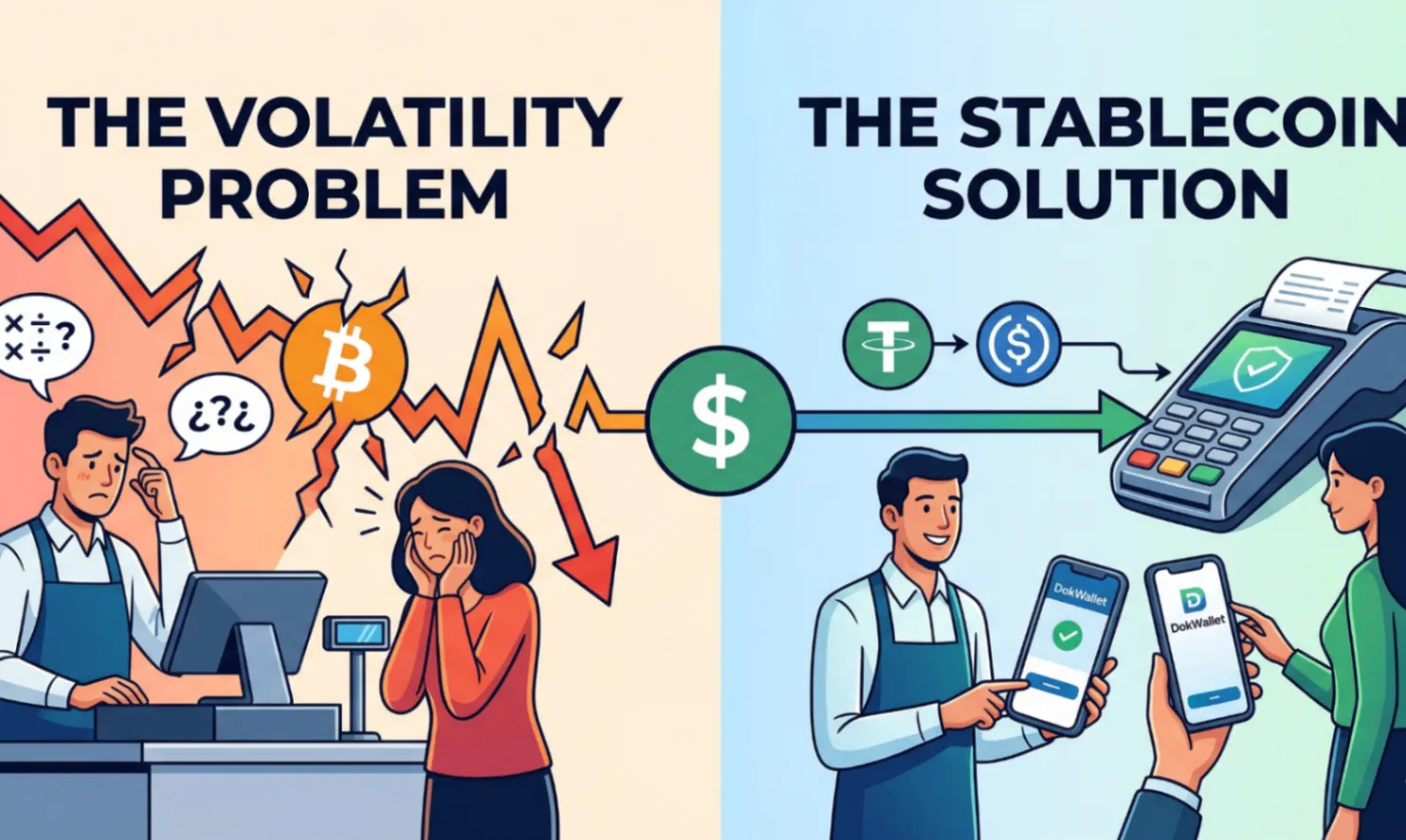
The promise of cryptocurrency as a payment method has been discussed since Bitcoin's earliest days. The reality has historically fallen short of the promise. Price volatility made crypto impractical for everyday purchases, merchant adoption was limited, and the user experience of actually paying with crypto was often cumbersome enough to make the traditional alternative more appealing.
The picture today is significantly different. Stablecoin adoption has addressed the volatility problem for everyday payments. Merchant and platform acceptance of crypto has expanded substantially. Mobile wallet applications have made the process of paying with crypto as straightforward as any other digital payment method. The gap between promise and reality has closed considerably.
Why Stablecoins Have Made Crypto Payments Practical
The fundamental obstacle to using volatile cryptocurrencies like Bitcoin or Ethereum for everyday payments is price instability. If the value of your payment asset changes significantly in a short period, pricing goods and services in that asset becomes impractical for merchants, and the risk of receiving or paying the wrong effective amount becomes a genuine concern for everyone involved.
Stablecoins solve this problem definitively. By maintaining a stable value pegged to a reference currency, typically the US dollar, stablecoins provide all the practical benefits of blockchain-based payments while eliminating the volatility that made earlier crypto payment experiments impractical.
USDT and USDC together process enormous transaction volume and are accepted by a rapidly expanding range of merchants, platforms, and service providers globally. DokWallet provides comprehensive stablecoin support across multiple blockchain networks, making it a natural stablecoin payment app for everyday payment activity alongside its broader wallet capabilities.
How Crypto Payments Work
When you pay with cryptocurrency, you are initiating a blockchain transaction that transfers a specified amount of a specified asset from your wallet address to the recipient's wallet address. This transaction is broadcast to the relevant blockchain network, validated by network nodes, and included in a block, at which point it is considered confirmed and complete.
The recipient must have a wallet address compatible with the asset being sent. For stablecoin payments, the recipient needs an address on the same network as the stablecoin being sent, such as a TRC-20 address for USDT on Tron, or an ERC-20 address for USDC on Ethereum. Network compatibility is an important practical consideration in crypto payments that every user must be aware of before transacting.
Once confirmed, the transaction is irreversible. Unlike a card payment that can be charged back or a bank transfer that may be recalled under certain circumstances, a confirmed blockchain transaction is final. This is a significant advantage for merchants wishing to avoid payment fraud, and a clear responsibility for payers to verify all transaction details before confirming.
What You Need to Pay with Crypto
Getting set up to pay with crypto requires a few straightforward elements. First, you need a non-custodial mobile wallet that supports the assets you intend to use for payments. DokWallet provides this as a comprehensive multi-chain mobile wallet with strong stablecoin support across multiple networks.
Second, you need funded wallet balances in the assets you intend to spend. This means either purchasing stablecoins directly through an exchange and transferring them to your DokWallet, or if you hold other cryptocurrencies, converting a portion to stablecoins for payment use.
Third, you need the recipient's wallet address or a QR code representing it. Most merchants and platforms that accept crypto payments provide a wallet address or scannable QR code at the point of payment. Always verify the address carefully before confirming any transaction without exception.
Paying with Crypto in Practice
The process of making a crypto payment through a mobile wallet like DokWallet follows a consistent and straightforward pattern. Open the wallet application and navigate to the send function for the asset you wish to use. Enter or scan the recipient's wallet address. Enter the amount you wish to send. Review the transaction details carefully, including the recipient address, the amount, the network, and the estimated fee. Confirm the transaction when you are satisfied that all details are correct.
Once confirmed, the blockchain processes the transaction. For most stablecoin transactions on networks like Tron or BNB Chain, this takes seconds to minutes. The recipient receives the funds directly in their wallet, without any intermediary processing step or delay.
Network Selection — An Important Practical Consideration
One aspect of crypto payments that requires specific attention is network selection. Most major stablecoins exist on multiple blockchain networks simultaneously. USDT is available on Ethereum, Tron, BNB Chain, and Solana among others.
The network you send on and the network the recipient expects to receive on must match precisely. Sending USDT on the Tron network to an address the recipient is using as an Ethereum address will result in funds that are unrecoverable. This is one of the most common errors in crypto payments and one that a well-designed mobile wallet should make clearly avoidable through explicit network labelling.
DokWallet displays network information clearly throughout the send process, reducing the risk of network mismatch errors significantly. For users who regularly send payments internationally using stablecoins, it is worth also reading our guide on cross-border crypto payments to understand the broader payment landscape.
Crypto Payments for Businesses
For businesses, accepting crypto payments offers several practical advantages that have made adoption increasingly attractive. No chargebacks represent a significant benefit for businesses in high-risk categories or those that have experienced payment fraud. Confirmed blockchain transactions cannot be reversed by the payer under any circumstances.
Lower processing fees, particularly for international transactions, can represent meaningful savings compared to card payment processing fees. Instant settlement eliminates the float period associated with card payments, where funds may not be available to the merchant for several days after the sale.
Global accessibility enables businesses to accept payments from customers in any country without the complexity and cost of international payment processing arrangements. For businesses looking to build this capability into their operations, DokWallet provides the non-custodial wallet infrastructure to do so securely and professionally.
Final Thoughts
Paying with cryptocurrency is genuinely practical in a way it has not always been. Stablecoins have solved the volatility problem. Mobile wallet applications have made the user experience straightforward. Merchant and platform acceptance continues to expand meaningfully across all major markets.
DokWallet provides the mobile wallet foundation for crypto payment activity, combining non-custodial security, multi-chain support, and a clear, intuitive interface that makes sending crypto payments straightforward for daily use by anyone.
Take ownership of your crypto. Visit dokwallet.com to download the DokWallet app today.
Frequently Asked Questions
Can I use any cryptocurrency for everyday payments?
Volatile cryptocurrencies like Bitcoin and Ethereum are less practical for everyday purchases because their value fluctuates. Stablecoins such as USDT and USDC are the most practical choice for everyday payments, as they maintain a stable value while retaining the speed and cost benefits of blockchain transactions.
What do I need to start paying with crypto?
You need a non-custodial mobile wallet with the assets you intend to spend, the recipient’s wallet address or QR code, and a small amount of the network’s native currency to cover transaction fees. DokWallet provides everything required to make crypto payments from a single mobile application.
Are crypto payments reversible?
No. Confirmed blockchain transactions are final and cannot be reversed. This is why verifying the recipient’s wallet address and the correct network before confirming any payment is essential. DokWallet displays all transaction details clearly before you confirm.
What is network selection and why does it matter for crypto payments?
Many stablecoins exist on multiple blockchain networks simultaneously. The network you send on must match the network the recipient expects to receive on. Sending USDT on the Tron network to an Ethereum address, for example, will result in unrecoverable funds. DokWallet displays network information clearly throughout the send process to help prevent this error.
Can businesses accept crypto payments using DokWallet?
Yes. Businesses can use DokWallet to receive crypto payments directly to a non-custodial wallet. Crypto payments offer no chargebacks, lower processing fees for international transactions, instant settlement, and global accessibility without complex payment processing arrangements.