
Cross-Border Crypto Payments: How Stablecoins Are Changing International Transfers
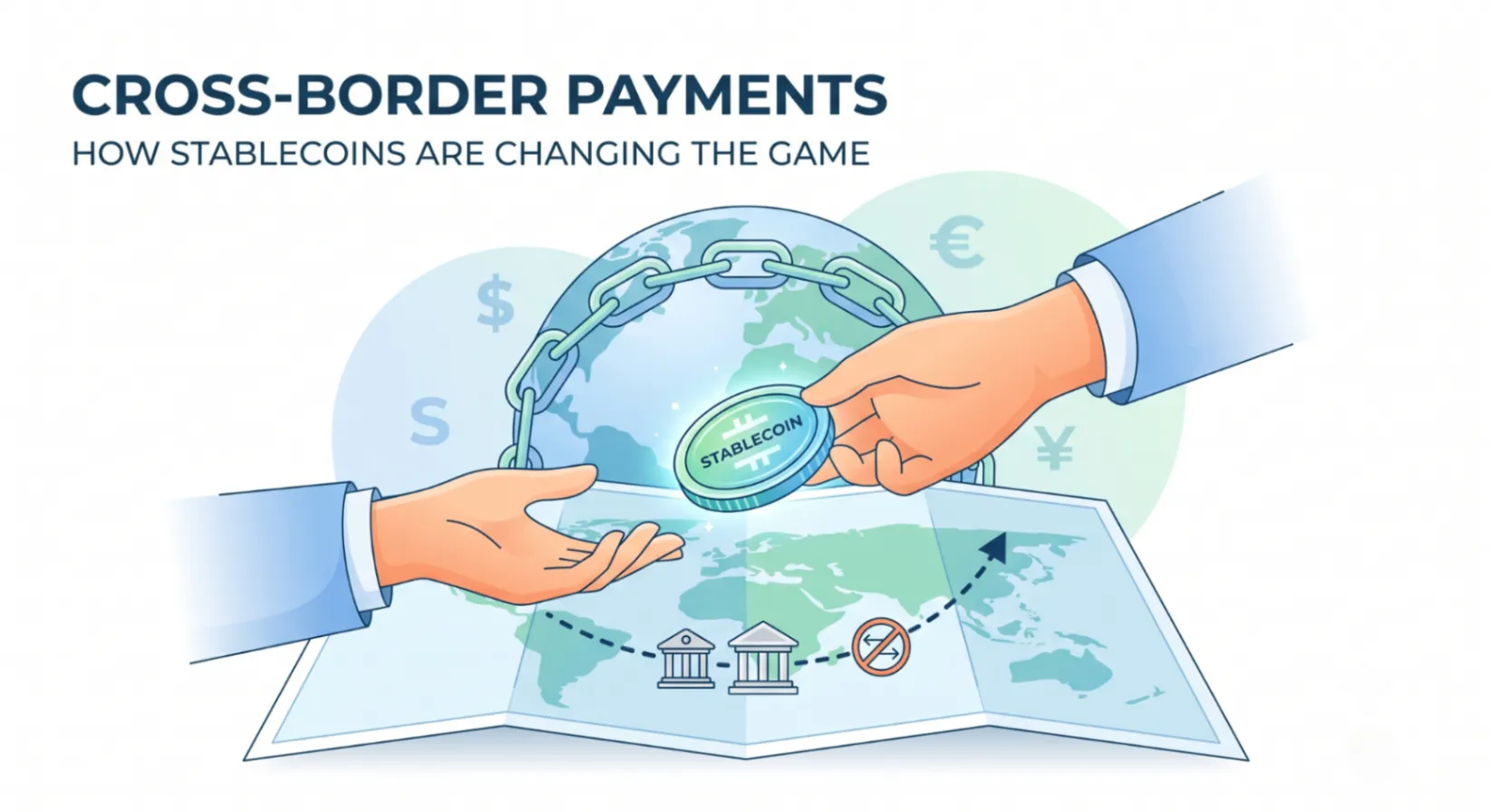
Sending money across borders has traditionally meant high fees, slow settlement times, and unpredictable exchange rates controlled by banks and remittance services. Cross-border crypto payments, particularly those built around stablecoins, are changing this equation by offering a faster, more transparent, and often significantly cheaper alternative. This guide explains how cross-border crypto payments actually work, why stablecoins have become the preferred vehicle for this use case, and what to consider before using them for international transfers.
Why Traditional Cross-Border Payments Are So Inefficient
Traditional international money transfers typically route through multiple intermediary banks, each taking a cut and adding processing time. A transfer that a sender initiates on a Monday might not actually reach the recipient’s account until several business days later, after passing through correspondent banking relationships, currency conversion steps, and compliance checks at each stage. On top of the delay, fees can range from a small percentage to a significant flat cost, particularly for smaller transfer amounts where fixed fees eat disproportionately into the total sent.
For freelancers, remote workers, small businesses, and families sending remittances, these inefficiencies aren’t just an inconvenience, they represent real, recurring costs that compound over time.
How Cross-Border Crypto Payments Work
A cross-border crypto payment fundamentally simplifies this process. Instead of routing through multiple banking intermediaries, the sender transfers crypto directly to the recipient’s wallet address, and the transaction settles on the blockchain, often within minutes, regardless of the geographic distance involved. There’s no intermediary bank to add days of processing time, and the fee structure is typically limited to the blockchain’s network transaction fee, which is often a small fraction of what traditional wire transfers cost.
The recipient can then hold the crypto directly, convert it to local currency through a local exchange or off-ramp service, or spend it directly if using a wallet with built-in payment features.
Why Stablecoins Are Central to This Use Case
While cross-border payments can technically use any cryptocurrency, stablecoins have become the preferred choice for a simple reason: price stability. A stablecoin is a cryptocurrency designed to maintain a consistent value, typically pegged to a fiat currency like the US dollar, by holding equivalent reserves or using algorithmic mechanisms to maintain the peg.
This matters enormously for payments. If you’re sending funds for rent, payroll, or a service payment, you need the recipient to receive a predictable amount of value, not an amount that fluctuates based on cryptocurrency market volatility between the time you send and the time they receive it. Stablecoins solve this by combining the speed and low cost of blockchain settlement with the price predictability of traditional currency.
Real-World Use Cases for Cross-Border Crypto Payments
- Freelancers and remote workers increasingly receive international client payments via stablecoins, avoiding the delays and fees associated with traditional wire transfers or payment platforms that charge significant conversion fees.
- Small businesses sourcing from or selling to international suppliers and customers use crypto payments to settle invoices faster, without waiting on multi-day bank clearing processes.
- Families sending remittances across borders benefit from dramatically reduced fees compared to traditional remittance services, some of which charge a significant percentage of smaller transfer amounts.
- Businesses managing international payroll for distributed teams use stablecoin payments to ensure consistent, fast settlement regardless of each employee’s local banking infrastructure.
How DokWallet Supports Cross-Border Payments
DokWallet’s multi-chain architecture supports stablecoin transfers across multiple networks, giving users flexibility in choosing the most cost-effective and fastest network for a given cross-border transfer. Combined with built-in pay-with-crypto functionality, this makes DokWallet a practical option for anyone regularly sending or receiving international payments. Because this functionality is built on the same non-custodial foundation as the rest of the app, senders and recipients retain full control over funds at every step of the transfer.
Choosing the Right Stablecoin for a Given Transfer
Not all stablecoins are structured the same way, and understanding the differences matters before relying on one for a significant cross-border transfer. Some stablecoins are backed by cash and cash-equivalent reserves held by a regulated issuer, publishing regular attestations or audits confirming that reserves match circulating supply. Others use algorithmic mechanisms or crypto-collateralized structures to maintain their peg, which can carry different risk profiles, particularly during periods of extreme market stress. For most everyday cross-border payment needs, sticking to well-established, transparently audited stablecoins with a long track record is the more conservative and generally recommended approach, especially for larger or recurring transfers where reliability matters more than marginal differences in fees.
Considerations Before Using Crypto for Cross-Border Payments
- Recipient readiness. The person receiving the payment needs a compatible wallet and, ideally, familiarity with converting stablecoins to local currency if they need fiat access.
- Regulatory environment. Cryptocurrency regulations vary significantly by country. It’s worth understanding the legal and tax treatment of crypto payments in both the sender’s and recipient’s jurisdictions before relying on this method for significant, recurring payments.
- Network selection. Different blockchain networks have different fee structures and settlement speeds. Choosing the right network for a given stablecoin transfer can meaningfully affect both cost and speed.
- Off-ramp availability. Recipients will eventually need a way to convert stablecoins to local currency if they need to spend in fiat, so it’s worth confirming reliable off-ramp options exist in the recipient’s region before relying entirely on crypto payments.
Security Practices Specific to Cross-Border Transfers
Because cross-border crypto payments are typically irreversible once confirmed on the blockchain, verification before sending matters even more than with domestic transfers. Always confirm the recipient’s wallet address through a secondary channel before sending a significant amount, particularly for a first-time transfer to a new recipient. It’s also worth sending a small test transfer first when initiating a new recurring payment relationship, such as a monthly remittance or freelance payment arrangement, to confirm the recipient can successfully receive and access the funds before committing to larger amounts. These same fundamentals are covered in more depth in our broader guide to crypto wallet security best practices, and they apply with extra weight to cross-border transfers given the difficulty of reversing a mistaken transaction.
Comparing Costs: Crypto vs. Traditional Remittance
Traditional remittance services often charge a combination of a flat fee and a percentage of the transfer amount, plus an often-hidden markup on the exchange rate used. For smaller transfers, these combined costs can represent a significant portion of the total amount sent. Cross-border crypto payments, by contrast, typically involve only the blockchain network’s transaction fee, which on efficient networks can be a small fraction of traditional remittance costs, particularly for larger transfer amounts where percentage-based fees compound significantly.
The Role of Regulation as Crypto Payments Mature
As cross-border crypto payments gain broader adoption, regulatory frameworks in many jurisdictions continue to evolve, particularly around stablecoin issuance, reserve transparency, and reporting requirements for larger transfers. This is generally a positive development for long-term users, since clearer regulation tends to bring greater institutional confidence, more reliable off-ramp infrastructure, and stronger consumer protections around stablecoin reserves. Staying informed about regulatory developments in your own jurisdiction, and the jurisdiction of anyone you regularly transact with, is a worthwhile ongoing habit for anyone using crypto payments as a recurring part of their financial life rather than a one-off experiment.
Frequently Asked Questions
Are stablecoins actually as stable as they claim?
Reputable stablecoins maintain their peg through verifiable reserves or transparent algorithmic mechanisms, though it’s worth researching a specific stablecoin’s backing and audit history before relying on it for significant transfers.
How fast do cross-border crypto payments settle?
Settlement time depends on the specific blockchain network used, but many networks confirm transactions within minutes, dramatically faster than traditional multi-day international wire transfers.
Do I need to convert crypto to cash immediately after receiving it?
No, recipients can hold stablecoins directly if they plan to spend or transfer them again soon, or convert to local currency through an exchange or off-ramp service when needed.
Final Thoughts
Cross-border crypto payments, powered by stablecoins, represent one of the most practical, immediately useful applications of blockchain technology for everyday financial needs. By removing multiple layers of intermediary banking infrastructure, they offer faster settlement and meaningfully lower costs for freelancers, businesses, and families sending money internationally.
To explore the practical side of spending and sending crypto payments, read our guide on how to pay with a crypto app. And if you’re managing payments across multiple blockchain networks, our guide to multi-chain crypto wallets explains how to consolidate that activity into a single interface.