Mastering Crypto Transactions Across Multiple Blockchains with DokWallet
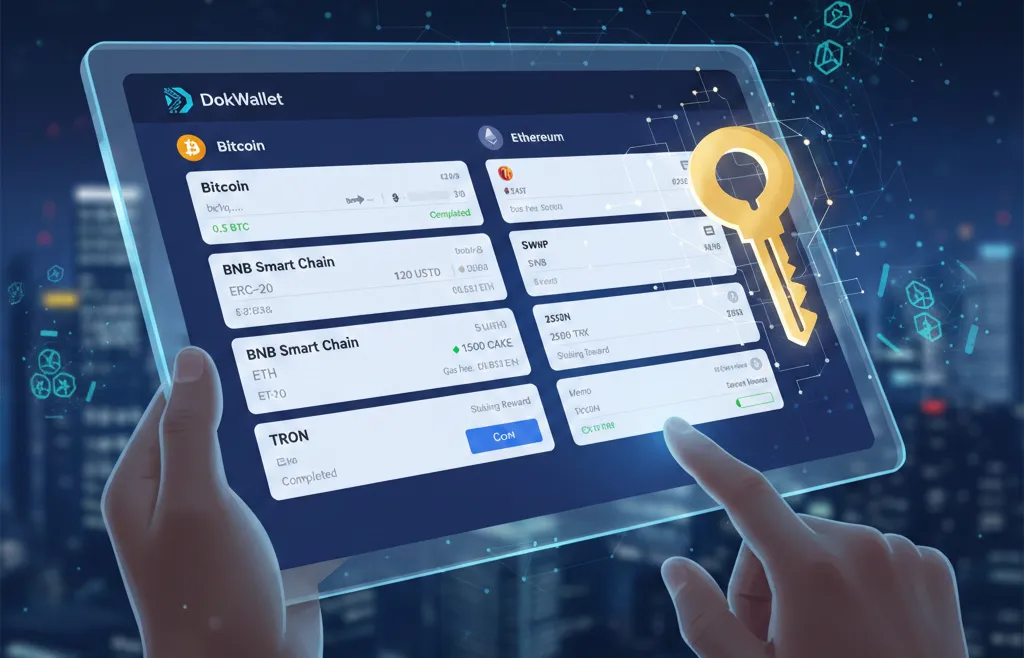
Cryptocurrency ownership today is about more than holding digital assets. It's about understanding networks, managing transactions responsibly, and maintaining control over private keys.
As blockchain ecosystems expand beyond Bitcoin into platforms like Ethereum, BNB Smart Chain, and TRON, users must navigate multiple environments — each with its own address formats, token standards, and fee structures.
Managing these differences requires a wallet designed for clarity and control.
DokWallet provides a structured, non-custodial solution for users who want to confidently manage crypto transactions across supported networks.
This guide explores how transaction management works in a multi-chain environment — and how DokWallet simplifies the process.
Understanding Blockchain Transactions
Before exploring wallet features, it's important to understand what happens during a crypto transaction.
When you send cryptocurrency:
- Your wallet creates a transaction request
- The request is signed using your private key
- The signed transaction is broadcast to the blockchain
- The network validates and confirms the transaction
The wallet does not move funds itself — it authorizes the blockchain to process them.
This is why private key control is critical.
DokWallet operates as a non-custodial wallet, meaning only the user can sign transactions. The private keys remain under user control, not stored by a third party.
This principle reflects the decentralized philosophy introduced by Satoshi Nakamoto when launching Bitcoin.
Managing Multiple Networks Without Confusion
Each blockchain operates independently.
For example:
- Bitcoin transactions occur only on the Bitcoin network
- ERC-20 tokens operate on Ethereum
- BEP-20 tokens operate on BNB Smart Chain
- TRC-20 tokens operate on Tron
Sending assets using the wrong network can result in complications.
DokWallet addresses this by clearly separating supported blockchains within the wallet interface.
Users can:
- Select the appropriate network before sending
- View balances per blockchain
- Generate addresses specific to each network
- Track transaction history separately
This structured design reduces the likelihood of cross-network errors.
Receiving Crypto the Right Way
Receiving cryptocurrency may appear simple, but network accuracy matters.
With DokWallet, receiving funds involves:
- Choosing the correct blockchain
- Copying the correct wallet address
- Sharing the QR code when necessary
Because address formats differ between networks, the wallet ensures clear labeling to prevent confusion.
For example:
- A Bitcoin address differs significantly from an Ethereum address
- Tron-based token addresses follow a distinct format
By clearly separating these formats, DokWallet promotes responsible transaction handling.
Sending Crypto with Transparency
When sending cryptocurrency, several factors must be reviewed:
- Recipient address
- Blockchain network
- Token standard
- Network fee
DokWallet provides transaction detail visibility before confirmation.
Users can:
- Review the destination address
- Confirm the selected network
- See the applicable network fee
- Approve the transaction manually
Only after user approval is the transaction signed and broadcast to the blockchain.
This transparent workflow ensures users understand exactly what they are authorizing.
Network Fees and Why They Matter
Every blockchain transaction includes a network fee.
Fees vary based on:
- Network congestion
- Blockchain design
- Transaction size
For example:
- Bitcoin fees fluctuate based on block demand
- Ethereum fees vary depending on network usage
- BNB Smart Chain and Tron operate under different fee structures
DokWallet displays fee information before transaction confirmation, allowing users to make informed decisions.
Understanding fees is part of responsible crypto management.
Buying Cryptocurrency Within DokWallet
Entering the crypto ecosystem begins with acquisition.
DokWallet allows users to purchase supported cryptocurrencies directly within the wallet.
This simplifies the onboarding process by reducing the need for multiple external platforms.
After purchase:
- Assets are deposited directly into the wallet
- Users maintain self-custody control
- Funds are accessible immediately within the selected blockchain environment
This integrated approach bridges the gap between first-time buyers and independent crypto ownership.
Connecting Securely to Decentralized Applications
Blockchain usage extends beyond transfers. Many users interact with decentralized applications (dApps).
To facilitate secure connections, DokWallet integrates with WalletConnect.
WalletConnect allows users to:
- Scan a QR code from a supported platform
- Establish a secure session
- Approve transactions inside DokWallet
Private keys never leave the wallet.
Each transaction requires explicit approval.
This ensures that interaction with decentralized platforms remains secure and user-controlled.
Mobile Accessibility for Real-Time Decisions
Crypto markets operate continuously.
Users need the ability to:
- Monitor balances
- Track confirmations
- Approve transactions
- Send assets instantly
DokWallet's mobile design ensures users can manage digital assets wherever they are.
Mobile accessibility does not compromise security — transaction approvals still require manual confirmation within the wallet.
Avoiding Common Crypto Transaction Mistakes
Even experienced users can make errors.
Common mistakes include:
- Selecting the wrong blockchain
- Copying incomplete addresses
- Ignoring network compatibility
- Overlooking transaction fees
DokWallet reduces these risks through:
- Clear blockchain labeling
- Address verification visibility
- Mandatory transaction confirmation steps
- Separate network environments
While responsibility ultimately rests with the user, structured wallet design minimizes risk.
Why Transaction Clarity Is the Future of Crypto
As blockchain adoption grows, usability becomes increasingly important.
Users need wallets that provide:
- Clear workflows
- Transparent fee structures
- Distinct network separation
- Secure transaction authorization
Complexity without clarity discourages adoption.
DokWallet focuses on simplifying essential actions:
- Buying crypto
- Storing assets
- Sending and receiving funds
- Connecting securely to decentralized platforms
It does not act as a centralized custodian. It does not store private keys externally. It provides the tools for secure blockchain interaction.
Responsible Self-Custody in Practice
Non-custodial wallets empower users — but empowerment requires responsibility.
To use DokWallet effectively, users should:
- Store recovery phrases offline
- Verify recipient addresses carefully
- Confirm blockchain selection before sending
- Review transaction details thoroughly
Self-custody means ownership — and ownership means diligence.
DokWallet provides the infrastructure for independence. The user ensures proper security practices.
Who Benefits from Structured Transaction Management?
DokWallet is particularly valuable for:
Multi-Chain Investors
Managing BTC, ETH, BEP-20, and TRC-20 tokens within one interface.
Active Crypto Users
Sending and receiving funds frequently across networks.
Web3 Participants
Securely connecting to supported decentralized platforms using WalletConnect.
First-Time Buyers
Purchasing crypto within the wallet and maintaining self-custody from the start.
The Bigger Picture: Simplifying Blockchain Participation
The crypto ecosystem will likely continue expanding across multiple networks.
With growth comes complexity.
Wallets that prioritize:
- Multi-chain clarity
- Self-custody security
- Transparent transactions
- Integrated purchasing
- Secure dApp connectivity
Will play a crucial role in long-term adoption.
DokWallet combines these core elements into a unified mobile solution.
Final Thoughts
Managing cryptocurrency across multiple blockchains does not have to be complicated.
With the right tools, users can:
- Buy supported digital assets
- Store them securely
- Send and receive across networks
- Connect to decentralized platforms
- Maintain full private key control
DokWallet provides a structured, non-custodial environment that supports responsible multi-chain transaction management.
In a decentralized financial ecosystem, clarity and control are essential.
DokWallet delivers both — within a secure, mobile-first, multi-chain wallet experience.