The Complete Guide to Managing Digital Assets with DokWallet
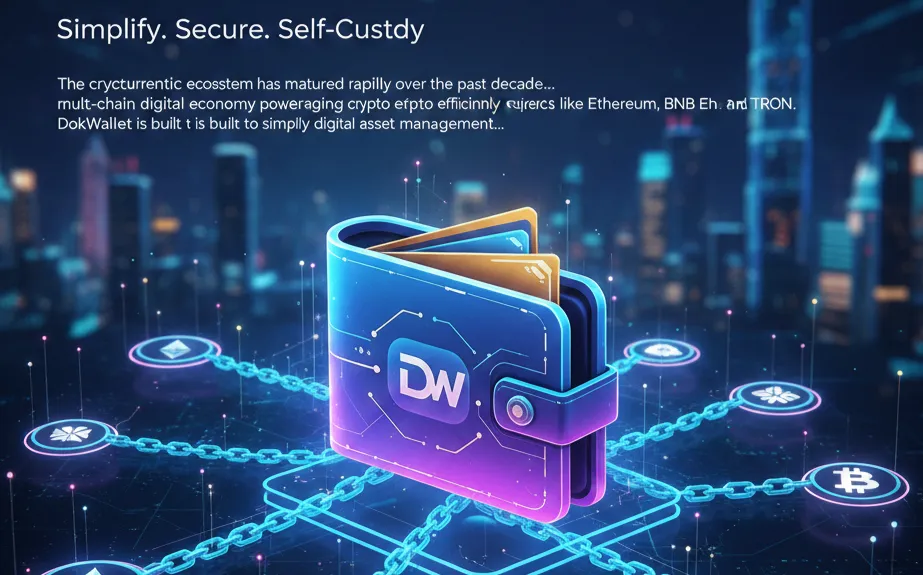
The cryptocurrency ecosystem has matured rapidly over the past decade. What began as a niche experiment with Bitcoin has evolved into a multi-chain digital economy powered by networks like Ethereum, BNB Smart Chain, and TRON.
As blockchain adoption increases, one thing has become clear: managing crypto efficiently requires the right wallet.
DokWallet is built to simplify digital asset management while keeping users in full control of their funds. This guide explores how DokWallet works, what it offers, and why self-custody combined with multi-chain support is becoming essential in modern crypto usage.
Understanding the Role of a Crypto Wallet
Before diving into DokWallet specifically, it's important to understand what a crypto wallet actually does.
A crypto wallet does not store coins physically. Instead, it stores:
- Private keys
- Public addresses
- Transaction signing permissions
When you send crypto, your wallet signs the transaction using your private key. The blockchain then verifies and records it.
This means the wallet you choose determines:
- How securely your keys are stored
- How easily you can send and receive assets
- Which blockchains you can access
- How conveniently you can manage multiple tokens
DokWallet focuses on making this process secure, user-controlled, and multi-chain compatible.
Multi-Chain Asset Management in One Wallet
One of the biggest challenges in crypto today is fragmentation. Assets are spread across multiple blockchain networks.
You might hold:
- BTC on the Bitcoin network
- ETH and ERC-20 tokens on Ethereum
- BEP-20 tokens on BNB Smart Chain
- TRC-20 tokens on Tron
Managing separate wallets for each network increases complexity and risk.
DokWallet's Multi-Chain Support
DokWallet supports multiple major blockchain networks within one application. This allows users to:
- Store different types of digital assets
- Send tokens across supported networks
- Receive funds using blockchain-specific addresses
- View transaction history per network
Instead of juggling multiple applications, users can monitor and manage assets from a single interface.
This streamlined approach reduces confusion, especially for users who diversify across ecosystems.
Sending and Receiving Crypto with Confidence
At its core, every wallet must perform two essential tasks efficiently:
- Sending crypto
- Receiving crypto
DokWallet provides a straightforward system designed for clarity and accuracy.
Receiving Funds
To receive cryptocurrency:
- Select the blockchain network
- Generate your wallet address
- Share the public address or QR code
Because wallet addresses differ across networks, DokWallet clearly separates addresses by chain. This reduces the risk of sending funds to the wrong network.
Sending Funds
When sending crypto, DokWallet allows users to:
- Enter a wallet address manually
- Scan a QR code
- Review transaction details before confirming
- View applicable network fees
Each transaction is signed within the wallet using your private key and then broadcast directly to the blockchain.
This ensures that DokWallet does not control or hold your assets — transactions are validated by the respective blockchain network.
Self-Custody: Full Control of Your Private Keys
A major distinction in the crypto world is between custodial and non-custodial wallets.
What Is Self-Custody?
In a custodial setup, a third party controls your private keys.
In a non-custodial setup, you control your keys.
DokWallet operates as a non-custodial wallet. During setup, users receive a recovery phrase. This phrase is the master key to accessing funds.
Only the user:
- Has access to the recovery phrase
- Can restore the wallet
- Can authorize transactions
This aligns with the decentralized principles introduced by Satoshi Nakamoto when designing Bitcoin's peer-to-peer system.
Why This Matters
Self-custody means:
- No third party can freeze your wallet
- Your assets are not stored on an exchange
- You remain responsible for secure backup
However, it also means safeguarding your recovery phrase is critical. Losing it could mean losing access to funds permanently.
DokWallet provides the structure — responsibility remains with the user.
Buying Cryptocurrency Within the Wallet
For new users, acquiring crypto is often the first hurdle.
DokWallet allows users to purchase supported cryptocurrencies directly within the wallet using available payment methods.
This eliminates the need to:
- Register on a separate exchange
- Transfer funds between platforms
- Manage multiple logins
By integrating crypto purchasing functionality into the wallet, DokWallet simplifies onboarding for beginners while maintaining self-custody control after purchase.
Once the purchase is complete, assets are stored directly in the user's wallet.
Securely Connecting to Decentralized Applications
The rise of decentralized applications (dApps) has expanded crypto usage beyond simple transfers.
To interact with dApps securely, wallets need safe connection protocols.
DokWallet integrates with WalletConnect, a widely used connection method that allows users to link their wallet to supported decentralized platforms.
How WalletConnect Integration Works
- Open WalletConnect inside DokWallet
- Scan a QR code from a supported platform
- Approve the connection
- Authorize transactions directly within the wallet
At no point are private keys exposed to external websites.
This allows users to interact with blockchain-based applications while maintaining control over transaction approvals.
Mobile-First Crypto Management
Crypto usage is increasingly mobile.
Users want:
- Instant access to portfolios
- Quick transaction approvals
- On-the-go management
DokWallet's mobile application ensures that users can:
- Monitor balances
- Review transaction history
- Send and receive assets
- Connect to dApps
All from a smartphone interface.
This accessibility supports real-time crypto management without sacrificing security principles.
Transaction Transparency and User Control
Every blockchain transaction includes network fees.
DokWallet provides visibility into:
- Estimated network fees
- Transaction confirmation status
- Historical transfers
Users can review details before approving transactions, minimizing mistakes.
This transparency ensures users understand exactly what is happening before confirming any transfer.
Why Multi-Chain Wallets Are Becoming Essential
The crypto landscape is no longer single-chain.
Developers build applications across:
- Ethereum
- BNB Smart Chain
- Tron
- Other compatible networks
Investors diversify holdings across ecosystems.
A wallet limited to one chain restricts flexibility.
DokWallet's multi-chain approach supports:
- Asset diversification
- Fee optimization (choosing networks when applicable)
- Portfolio consolidation
As blockchain technology expands, the ability to manage multiple networks in one secure location becomes increasingly important.
Responsible Crypto Ownership
With greater control comes greater responsibility.
Using a non-custodial wallet like DokWallet means:
- Backing up recovery phrases securely
- Verifying recipient addresses carefully
- Understanding network compatibility before sending
The wallet provides tools and infrastructure — the user provides diligence.
This balance between empowerment and responsibility defines modern crypto ownership.
Who Is DokWallet Best Suited For?
DokWallet can serve a wide range of users:
Beginners
- Easy crypto purchase integration
- Simple send/receive interface
- Mobile-friendly design
Multi-Chain Investors
- Manage BTC, ETH, BEP-20, TRC-20 tokens
- Avoid juggling multiple wallets
Self-Custody Advocates
- Full control of private keys
- Non-custodial architecture
Web3 Participants
- Secure WalletConnect integration
- Controlled transaction approvals
The Bigger Picture: Simplicity + Control
Crypto can be complex. Networks differ. Tokens vary. Fees fluctuate.
A good wallet reduces friction without removing user control.
DokWallet focuses on:
- Multi-chain compatibility
- Self-custody security
- Clear transaction workflows
- Direct crypto purchases
- Secure dApp connectivity
It does not attempt to replace blockchain networks. It does not custody user funds. It does not act as a centralized exchange.
Instead, it functions as a user-controlled gateway to blockchain ecosystems.
Final Thoughts
As digital assets continue to evolve beyond speculation into everyday usage, the importance of secure and flexible wallet infrastructure grows.
DokWallet addresses core crypto needs:
- Store digital assets securely
- Send and receive funds confidently
- Buy supported cryptocurrencies
- Connect to decentralized platforms
- Maintain full private key control
In an industry built on decentralization, the tools that empower users — without taking control away from them — are the ones that matter most.
DokWallet provides that balance: Control, compatibility, and convenience — in one multi-chain wallet.