What Is a Multi-Chain Crypto Wallet and Why Does It Matter?
The cryptocurrency ecosystem has evolved far beyond Bitcoin. Today there are dozens of major blockchain networks — Ethereum, BNB Chain, Solana, Polygon, Avalanche, and many more — each hosting thousands of tokens, decentralised applications, and financial protocols. Managing assets across these networks has become one of the most practical challenges facing everyday crypto users.
A multi-chain crypto wallet solves this problem by allowing you to store, send, and receive assets across multiple blockchains within a single application. This article explains how multi-chain wallets work, why they are increasingly essential, and what to look for when choosing one.
The Problem: A Fragmented Blockchain Ecosystem
In the early days of crypto, Bitcoin was essentially the only serious network. One wallet handled everything. As the ecosystem expanded, different blockchains emerged with their own native currencies, token standards, and address formats. Ethereum introduced ERC-20 tokens. BNB Chain introduced BEP-20 tokens. Each network uses different address formats and transaction mechanics.
The result for users is friction: managing multiple wallets, tracking different seed phrases, switching between applications, and maintaining balances in multiple places just to participate across the crypto ecosystem.
What Is a Multi-Chain Crypto Wallet?
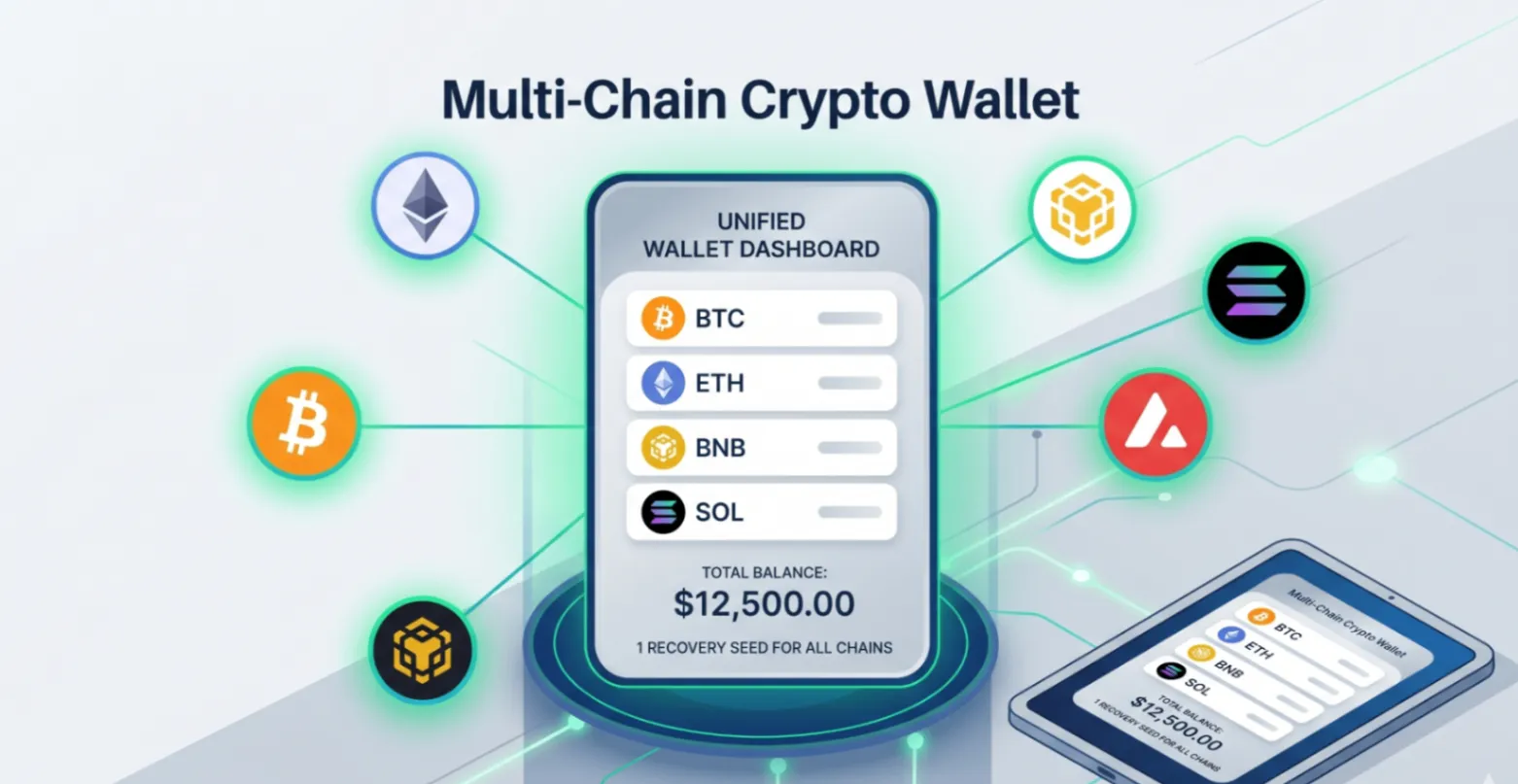
A multi-chain crypto wallet — also called a multi blockchain wallet or crypto wallet for multiple coins — is a single application that can manage assets across multiple independent blockchain networks simultaneously. Instead of using one wallet for Bitcoin, another for Ethereum, and a third for BNB Chain tokens, a multi-chain wallet consolidates everything into one interface.
The key technical enabler is that most multi-chain wallets derive all their keys from a single seed phrase using hierarchical deterministic (HD) wallet technology. One seed phrase generates all the keys for all supported chains. This means one backup covers everything — a significant security and usability advantage.
Core Features of a Multi-Chain Wallet
Unified Asset Dashboard
A good multi-chain wallet shows you all your holdings across all supported blockchains in a single view. You can see your Bitcoin balance, your Ethereum and ERC-20 tokens, your BNB Chain holdings, and any other supported assets without switching between applications.
Chain-Appropriate Transactions
When you send funds, the wallet automatically handles the chain-specific mechanics: the right address format, the correct fee token, and the appropriate gas estimation for the network you are transacting on. The user experience is consistent even though the underlying technical requirements differ significantly.
Single Seed Phrase for All Chains
A single seed phrase covers all wallets across all supported chains in most modern multi-chain wallets. This is both simpler and more secure than managing separate seed phrases for each network.
DApp Connectivity Across Chains
Multi-chain wallets that support WalletConnect allow you to connect to DApps on different chains without switching applications. DokWallet, for example, supports WalletConnect — allowing users to interact with Ethereum DApps, DeFi protocols, and NFT platforms directly from the mobile app.
Why Multi-Chain Support Is No Longer Optional
The practical case for multi-chain wallets has grown substantially:
- DeFi yield opportunities exist across multiple chains and require access to each network
- Gas fees on Ethereum can be high, making alternatives like Polygon or BNB Chain attractive for smaller transactions
- NFT ecosystems exist across multiple chains
- Stablecoin holdings may be distributed across networks for liquidity reasons
- Cross-chain bridges and transfers require interacting with multiple networks
Users who restrict themselves to a single chain are increasingly limited in the opportunities available to them.
What to Look For in a Multi Blockchain Wallet
- Breadth of chain support: Does it cover the chains you actually use?
- Token detection: Does it automatically recognise tokens when you deposit them, or must you manually add contracts?
- Non-custodial architecture: Are your private keys stored locally, or controlled by a third party?
- Open-source codebase: Can independent researchers verify the security claims?
- Mobile-first design: Is the wallet usable day-to-day on a smartphone without compromising on functionality?
DokWallet as a Multi-Chain Solution
DokWallet is built from the ground up as a multi blockchain wallet supporting Bitcoin, Ethereum, and a wide range of EVM-compatible networks and tokens. The entire application is non-custodial and open source, which means both your asset security and the security claims of the wallet itself can be independently verified.
The interface presents all assets in a unified dashboard, with chain-specific handling happening in the background. Swapping between assets, viewing transaction history by chain, and connecting to DApps via WalletConnect are all available within the same application.
Conclusion
A multi-chain crypto wallet is not a luxury feature — it is the practical foundation for engaging with the modern crypto ecosystem. As the number of significant blockchain networks continues to grow, the ability to manage assets across all of them from a single, secure, non-custodial application becomes increasingly essential.
DokWallet delivers that capability in a form that is accessible on mobile, verifiable through open source, and built around genuine self-custody. For anyone serious about managing a diversified crypto portfolio, multi-chain support is where to start.