What Is a Multi-Chain Crypto Wallet and Why You Need One?
The cryptocurrency ecosystem has expanded dramatically beyond Bitcoin and Ethereum. Today, dozens of major blockchain networks operate simultaneously, each with its own ecosystem of applications, tokens, and users. Ethereum, Solana, BNB Chain, Polygon, Avalanche, and Tron are all active, significant networks with real economic activity happening on them every day.
For crypto users, this creates a practical challenge. If your assets and activities span multiple blockchains, how do you manage them without maintaining a separate wallet for each network? The answer is a multi-chain crypto wallet, and it has become not a luxury but a necessity for anyone engaging meaningfully with the crypto ecosystem today.
Understanding Blockchain Fragmentation
Different blockchain networks were built with different goals and trade-offs. Ethereum prioritised programmability and decentralisation. Solana prioritised speed and throughput. BNB Chain prioritised low fees and ecosystem integration. Each network has genuine strengths that attract different users, developers, and applications.
The result is a multi-chain world where the best applications, opportunities, and assets are spread across different networks rather than concentrated on one. Engaging with the full range of what crypto offers means engaging with multiple blockchains simultaneously.
Without a multi-blockchain wallet, this requires maintaining separate wallet applications for each network, managing multiple seed phrases, and constantly switching between applications. It is fragmented, cumbersome, and a significant security risk given the number of seed phrases involved.
What Is a Multi-Chain Crypto Wallet?
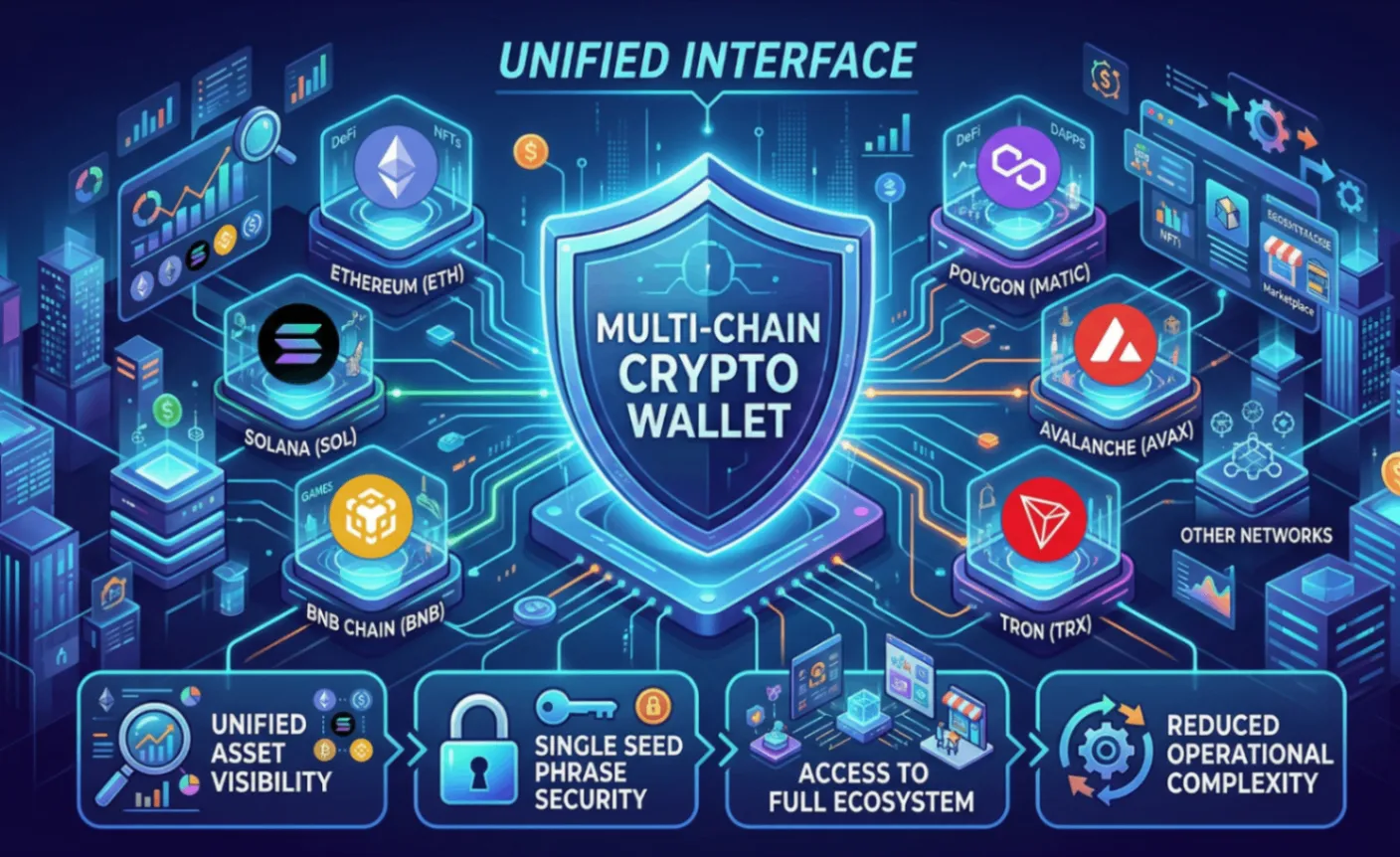
A multi-chain crypto wallet is a single wallet application that supports multiple blockchain networks within one unified interface. Rather than requiring a separate wallet for Ethereum, a separate wallet for Solana, and another for BNB Chain, a multi-chain wallet manages all of these networks and the assets associated with them from a single application, secured by a single seed phrase.
DokWallet is built as a comprehensive multi-chain wallet, supporting a broad range of blockchain networks and enabling users to manage a complete multi-asset crypto wallet from a single, secure application.
The Practical Benefits of a Multi-Chain Wallet
Unified asset visibility is one of the most immediately valuable features of a multi-chain wallet. Rather than opening multiple applications to get an overview of your holdings, a multi-chain wallet shows all your assets across all supported networks in one place. This makes portfolio management significantly more practical and accurate.
Single seed phrase security is a major advantage that is sometimes overlooked. Every wallet you maintain requires its own seed phrase. Multiple seed phrases mean multiple points of failure, with more phrases to store securely and more opportunities for one to be lost, stolen, or compromised. A multi-blockchain wallet consolidates all assets under a single seed phrase, simplifying security management considerably.
Access to the full crypto ecosystem means a crypto wallet for multiple coins gives you access to the entire ecosystem, not just one corner of it. The best opportunities in DeFi, NFTs, gaming, and decentralised applications are not concentrated on any single blockchain.
Reduced operational complexity matters particularly for users managing significant or diverse portfolios. Keeping track of assets, transactions, and network activity across multiple separate wallets is operationally complex and error-prone. A unified multi-chain wallet dramatically reduces this complexity.
Multi-Chain vs Single-Chain Wallets
The limitations of a single-chain wallet become apparent quickly for any user who begins engaging with the broader crypto ecosystem. A wallet that supports only Ethereum cannot manage assets on Solana or BNB Chain. If you want to participate in a Solana-based application, you need a separate Solana wallet with a separate seed phrase. The complexity multiplies with each new blockchain you engage with.
A multi-asset crypto wallet like DokWallet eliminates this entirely. One application, one seed phrase, and access to the full range of supported blockchains and their associated tokens and applications. If you also need to move assets between different chains, read our guide on the cross-chain crypto wallet capabilities built into DokWallet.
Key Blockchains in a Multi-Chain Wallet
When evaluating a multi-chain crypto wallet, the range of supported blockchains is a primary consideration. The most important networks include Ethereum and its layer-2 networks, which host the largest DeFi ecosystem and the majority of significant decentralised applications. BNB Chain offers low fees and a large user base. Solana has established itself as a major ecosystem for high-speed applications, gaming, and NFTs. Tron is widely used for stablecoin transfers, particularly for USDT. Bitcoin remains the most widely held cryptocurrency. Avalanche hosts a growing DeFi ecosystem with increasing institutional adoption.
DokWallet is designed to provide broad multi-chain support, enabling users to engage with the full range of relevant blockchain ecosystems from a single application.
Multi-Chain Wallets and DeFi
DeFi protocols are distributed across multiple blockchains, and the best yields, most liquid markets, and most innovative applications are often found on different networks at different times. A multi-blockchain wallet enables users to follow opportunities across the entire DeFi landscape without the friction of managing multiple separate wallets.
This is increasingly important as the DeFi ecosystem matures and becomes more sophisticated. Combine this with DokWallet's cross-border crypto payment capabilities and you have a complete tool for both investment and everyday payment use cases.
Final Thoughts
The multi-chain world is not a future state. It is the present reality of cryptocurrency. Managing assets across multiple blockchains with multiple separate wallets is inefficient, complex, and introduces unnecessary security risk. A multi-chain crypto wallet is the natural and necessary response to this reality.
DokWallet provides a comprehensive multi-blockchain wallet experience built around genuine non-custodial ownership, broad network support, and a mobile-first design that makes managing crypto across multiple chains practical for everyday use.
Take ownership of your crypto. Visit dokwallet.com to download the DokWallet app today.
Frequently Asked Questions
What is a multi-chain crypto wallet?
A multi-chain crypto wallet is a single application that supports multiple blockchain networks within one unified interface. Rather than maintaining separate wallets for Ethereum, Solana, BNB Chain, and other networks, a multi-chain wallet manages all of them from one app secured by a single seed phrase.
Why do I need a multi-chain wallet?
If your crypto portfolio spans more than one blockchain, a multi-chain wallet eliminates the need to manage multiple apps and seed phrases. It gives you unified visibility across all your assets, simplifies security, and reduces the operational complexity of managing a diverse portfolio.
Is DokWallet a multi-chain wallet?
Yes. DokWallet is built as a comprehensive multi-chain wallet supporting a broad range of blockchain networks, enabling you to manage your entire multi-asset portfolio from a single, non-custodial application.
Does a multi-chain wallet use one seed phrase for all blockchains?
Yes. A well-designed multi-chain wallet derives wallets for each supported blockchain from a single seed phrase. This means you only need to secure one recovery phrase to protect your entire multi-chain portfolio.
Can a multi-chain wallet also move assets between chains?
Multi-chain support and cross-chain transfer capability are related but distinct features. A multi-chain wallet manages assets across different networks; cross-chain functionality enables you to move assets between those networks. DokWallet provides both capabilities within a single application.