Cross-Chain Crypto Wallet: Moving Assets Between Blockchains Without the Complexity
One of the most confusing aspects of managing a diverse crypto portfolio is moving assets between different blockchains. You might hold USDC on Ethereum but need it on Polygon. You might want to move value from Bitcoin into an Ethereum DeFi application. These cross-chain movements require the right tools and a clear understanding of how they work.
This guide covers what cross-chain transfers involve, the technologies that enable them, and how DOK Wallet approaches cross-chain capability as part of its multi-asset design.
What Does Cross-Chain Actually Mean?
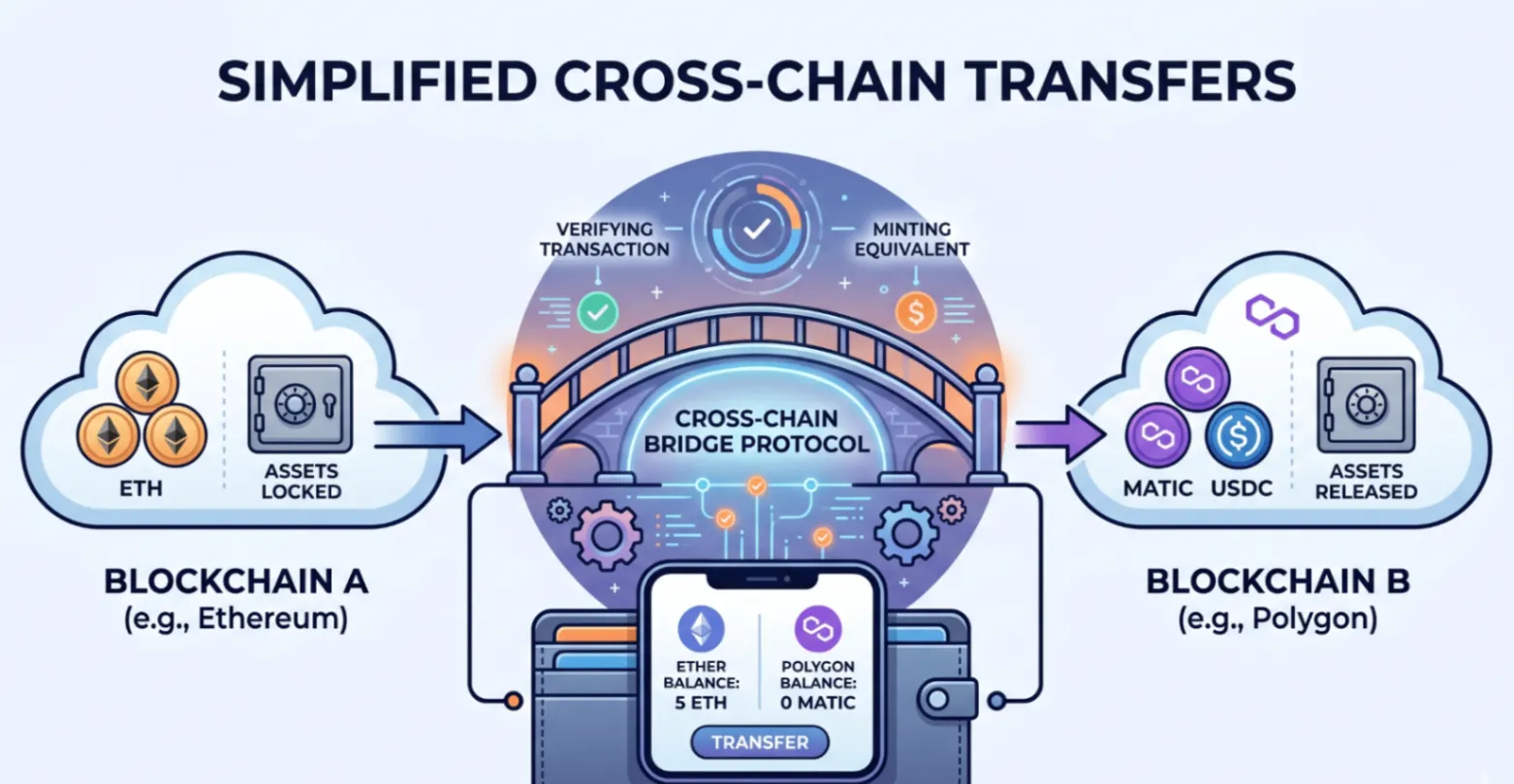
Blockchains are isolated networks. Bitcoin does not natively communicate with Ethereum. Ethereum does not natively communicate with BNB Chain. Each network has its own consensus rules, address formats, and transaction mechanics. Moving assets between them requires a bridge or a cross-chain protocol that locks assets on one chain and mints equivalent representations on another.
A cross-chain crypto wallet is one that manages addresses across multiple networks and facilitates or integrates with the tools needed to move value between them. DOK Wallet is built as a multi-asset crypto wallet that gives you visibility and control over assets on each supported chain.
For background on how multi-chain wallets manage multiple networks, read our multi-chain wallet guide.
The Technology Behind Cross-Chain Transfers
The most common cross-chain mechanism is a bridge protocol. Bridges work by accepting assets on a source chain, locking or burning them, and then releasing or minting equivalent assets on a destination chain. Some bridges use trusted validators; others use cryptographic proofs to verify the lock-release process without centralized trust.
Wrapped tokens are the output of many bridge operations. When you bridge Bitcoin to Ethereum, you receive WBTC, a token on Ethereum that represents one Bitcoin held in custody by the bridge. The Bitcoin is locked; the WBTC is your cross-chain representation of it.
Multi-Asset Crypto Wallet and Cross-Chain Reality
DOK Wallet functions as a multi-asset crypto wallet that holds your assets on each supported chain in separate addresses, all derived from your single seed phrase. When you initiate a cross-chain movement through an integrated bridge, DOK Wallet manages the sending address on the source chain and the receiving address on the destination chain.
This gives you a clean user experience: you initiate the transfer, approve the transaction, and see your updated balances when the cross-chain operation completes. The complexity of lock-mint bridge mechanics happens behind the scenes.
Common Cross-Chain Use Cases
Understanding why users need cross-chain capability helps clarify what to look for in a wallet:
- Moving stablecoins from Ethereum to a lower-fee network for daily payments.
- Bridging assets to access DeFi protocols available only on specific chains.
- Consolidating holdings from multiple chains into a preferred network.
- Accessing yield opportunities on networks where the same asset earns more.
For the payments use case specifically, read our guide to cross-border crypto payments.
Risks and Considerations in Cross-Chain Operations
Cross-chain bridges are one of the most targeted areas in crypto security. Several major bridge exploits have resulted in hundreds of millions of dollars in losses. When using any bridge or cross-chain protocol, due diligence is essential:
- Use established bridges with long track records and audited code.
- Understand the lock-release mechanism and any centralization in the validator set.
- Start with small amounts when testing a new bridge for the first time.
- Verify destination addresses carefully before approving any transaction.
DOK Wallet's Role in Cross-Chain Management
DOK Wallet provides the wallet layer for cross-chain management: maintaining the addresses on each chain, signing transactions, and presenting balances across networks. The non-custodial model means your assets on each chain are always under your exclusive control, both before and after any cross-chain operation.
The open-source nature of DOK Wallet means the transaction signing and key management processes for each chain can be independently verified. You are never trusting a black box with the keys to your cross-chain assets.
See how DOK Wallet handles mobile-first multi-chain access in our mobile wallet guide. Read the full DOK Wallet feature overview in our comprehensive wallet review.
Frequently Asked Questions
What does cross-chain mean in crypto?
Cross-chain refers to moving assets between different blockchain networks. Because blockchains like Bitcoin and Ethereum are isolated networks that do not natively communicate, cross-chain transfers require bridge protocols that lock assets on one chain and release equivalents on another.
How does a cross-chain bridge work?
A bridge accepts assets on a source chain, locks or burns them, then releases or mints equivalent assets on the destination chain. Some bridges use trusted validators; others use cryptographic proofs. The output is often a wrapped token representing the original asset.
What is a wrapped token?
A wrapped token is a representation of an asset from one blockchain on another. For example, WBTC is Bitcoin wrapped on Ethereum — one WBTC represents one BTC held in custody by the bridge protocol. It lets you use Bitcoin's value within the Ethereum ecosystem.
Are cross-chain bridges safe to use?
Bridges are one of the most targeted areas in crypto security and have been exploited for significant losses. Best practice is to use established bridges with long track records and audited code, start with small test amounts, and verify destination addresses carefully.
Does DOK Wallet support cross-chain transfers?
DOK Wallet provides the wallet layer for cross-chain management — maintaining your addresses on each chain, signing transactions, and displaying balances across networks. Cross-chain operations through integrated bridges are supported within the app.
Can I hold assets on multiple chains simultaneously in DOK Wallet?
Yes. DOK Wallet maintains separate addresses on each supported blockchain, all controlled by your single seed phrase. You can hold Bitcoin, Ethereum, BNB Chain assets, and Polygon tokens at the same time within one unified portfolio view.
Final Thoughts
Cross-chain capability is increasingly essential for any active crypto user. Whether you are chasing DeFi yields, making international payments, or simply managing assets that have ended up across multiple networks, a cross-chain crypto wallet with strong non-custodial foundations is the right tool.
Download DOK Wallet and manage your cross-chain portfolio at dokwallet.com.