
Crypto Wallet Security Best Practices Every Self-Custody User Should Know
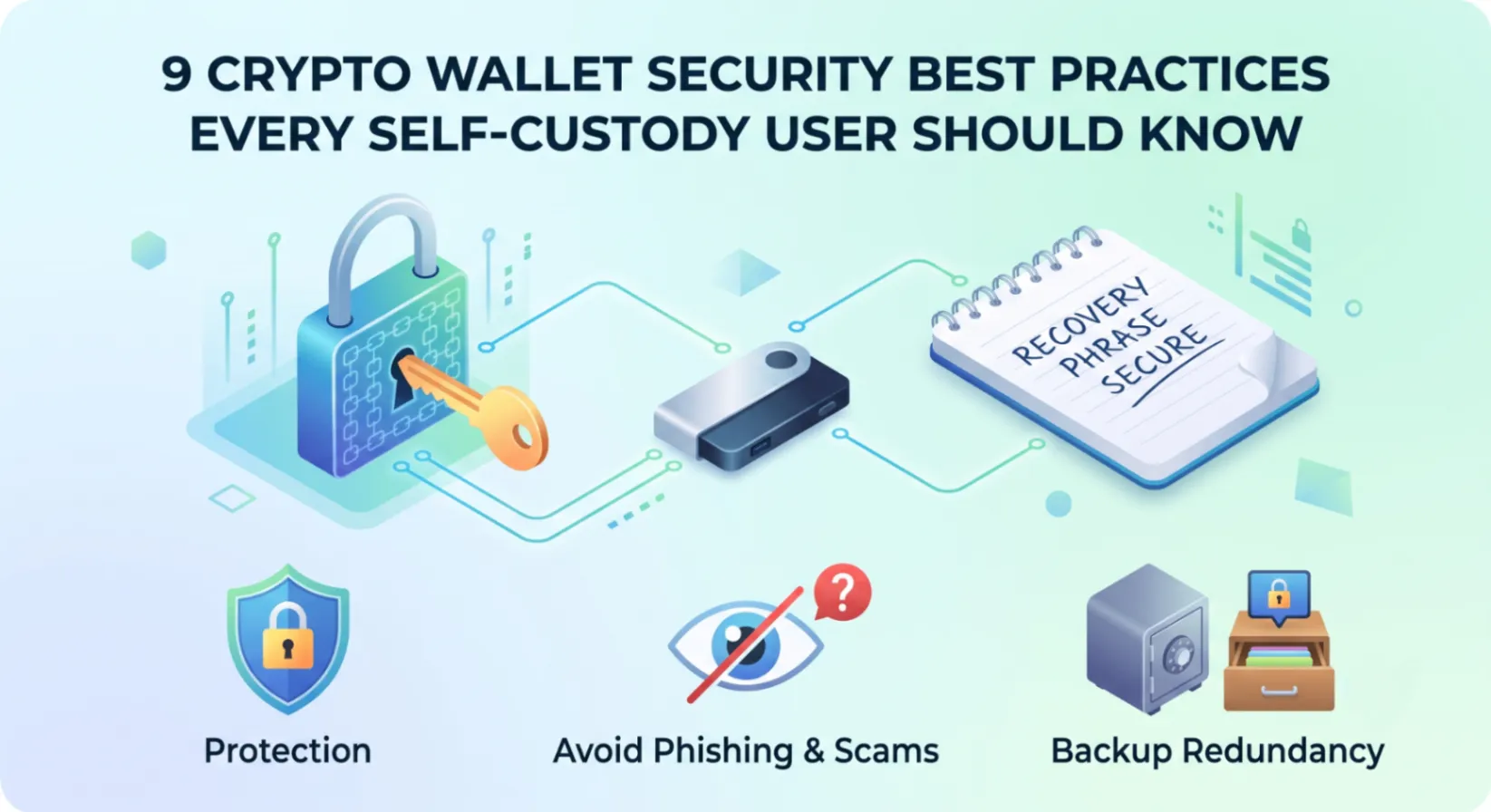
Choosing a non-custodial wallet is only the first step toward genuine crypto security. Because self-custody puts full responsibility for your funds in your own hands, understanding and consistently applying strong security practices is what actually determines whether that responsibility works in your favor or against you. This guide covers the essential security fundamentals every self-custody crypto user should know, whether you’re just getting started or looking to tighten up habits you’ve had for years.
Why Self-Custody Security Is Different
When you hold assets on a centralized exchange, security is largely the platform’s responsibility. When you switch to a non-custodial wallet, that responsibility shifts entirely to you. There’s no password reset, no fraud department, and no insurance fund to fall back on if something goes wrong. This isn’t a flaw in the system, it’s the direct trade-off for the control and independence that a decentralized crypto wallet provides. Understanding this trade-off is the starting point for taking security seriously.
Recovery Phrase Protection: The Foundation of Everything
Your recovery phrase, typically 12 or 24 words, is the single most important piece of information tied to your wallet. Whoever has it has complete access to your funds, and if you lose it without any backup, there is no way to recover your assets.
Best practices for recovery phrase protection include:
- Write it down physically, on paper or a durable metal backup, never as a digital file, screenshot, or cloud note.
- Store it in a secure, separate location from your device, ideally somewhere protected from fire, water damage, and unauthorized physical access.
- Never enter it into a website or app other than your legitimate wallet application during initial setup or recovery.
- Never share it with anyone, including someone claiming to be customer support. No legitimate wallet provider will ever ask for your recovery phrase.
- Consider splitting a backup across multiple secure locations for very large holdings, reducing the risk of a single point of failure.
Recognizing and Avoiding Phishing Attempts
Phishing remains one of the most common attack vectors targeting crypto users, precisely because a single successful phishing attempt can result in complete, irreversible loss of funds. Common phishing tactics include:
- Fake support messages requesting your recovery phrase or seed words to “verify” your account or “fix” a supposed issue.
- Lookalike websites that closely mimic a legitimate wallet provider’s official site, often promoted through paid search ads or social media links.
- Fake wallet apps listed in unofficial app stores or shared through direct download links outside official app store channels.
- Address poisoning scams, where an attacker sends a tiny transaction from an address resembling one you’ve previously interacted with, hoping you’ll accidentally copy the wrong address from your transaction history for a future transfer.
The consistent defense against all of these is the same: never share your recovery phrase under any circumstances, always verify you’re using official download sources and websites, and double-check full wallet addresses rather than relying on partial matches.
Device-Level Security Habits
Beyond wallet-specific practices, general device security significantly affects your overall crypto security posture:
- Keep your device’s operating system updated to patch known security vulnerabilities.
- Use a strong, unique device passcode, separate from any PIN used within your wallet app.
- Enable biometric authentication where available, adding a layer of security beyond a simple passcode.
- Avoid installing wallet apps from unofficial sources, even if they appear identical to the legitimate app.
- Be cautious on public Wi-Fi when accessing financial apps, including crypto wallets, preferring a trusted network or mobile data connection instead.
Multi-Chain and Cross-Chain Security Considerations
If you use a multi-chain crypto wallet, extend the same careful verification habits across every network you interact with. Always confirm the correct network is selected before sending a transaction, since sending assets on the wrong network is one of the most common, and often unrecoverable, mistakes in crypto. This becomes especially important when using cross-chain bridge functionality, where verifying both the source and destination network details before confirming a transfer helps avoid costly errors.
Learning From Common Security Failures
Looking at the broader history of crypto security incidents, a clear pattern emerges: the vast majority of individual fund losses trace back to a small number of repeated mistakes rather than sophisticated, unavoidable attacks. Recovery phrases stored digitally and later exposed through a compromised device or cloud account. Recovery phrases entered into a fake website mimicking a legitimate wallet provider during a moment of urgency or confusion. Funds sent to the wrong network after skipping a verification step. Each of these failure patterns is entirely preventable with the habits outlined above, which is genuinely good news: crypto security, while requiring discipline, doesn’t require deep technical expertise to get right consistently.
Building a Sustainable Security Routine
Security isn’t a one-time setup task, it’s an ongoing habit. Periodically review your wallet’s connected applications and permissions, particularly if you’ve used your wallet to connect to various decentralized apps over time. Stay informed about known scam patterns circulating within the crypto community, since attackers continually adapt their tactics. And resist the urge to rush through security-critical steps, like recovery phrase backup, even when you’re eager to start using a new wallet.
Security on Mobile: Extra Considerations
Since most crypto activity now happens on mobile devices, it’s worth applying a few mobile-specific precautions on top of general wallet security. Avoid leaving your wallet app logged in and unattended on a shared or public device, and be cautious about which apps you grant clipboard access to, since malicious apps have historically attempted to intercept copied wallet addresses and silently swap them for an attacker’s address. Our guide to the best mobile crypto wallet options covers additional mobile-specific security features worth prioritizing when choosing an app.
What to Do If You Suspect a Security Issue
If you believe your recovery phrase may have been compromised, whether through a phishing attempt, device theft, or accidental exposure, the safest response is to immediately move your funds to a brand new wallet with a freshly generated recovery phrase, rather than waiting to see if anything happens. Because blockchain transactions are irreversible and there’s no central authority to freeze a compromised wallet, acting quickly is the only real mitigation available once a recovery phrase’s security is in doubt.
Frequently Asked Questions
Is it safe to store my recovery phrase in a password manager?
Most security experts recommend against digital storage of recovery phrases, including password managers, due to the risk of the password manager itself being compromised. Physical, offline storage remains the safer standard practice.
How often should I review my wallet’s security settings?
A periodic review, roughly every few months or after any major security-relevant event like a new device setup, is a reasonable habit for most users.
Can a hardware wallet fully replace good security habits?
No. A hardware wallet adds a strong layer of protection, particularly against remote attacks, but doesn’t eliminate the need for careful recovery phrase storage and phishing awareness.
Is it risky to keep all my crypto in one wallet?
Concentrating very large holdings in a single wallet increases the impact of any single point of failure. Many experienced users split holdings between an actively used mobile wallet and a separate, rarely accessed cold storage setup for long-term savings.
Final Thoughts
Strong crypto wallet security comes down to a consistent set of habits: protecting your recovery phrase, staying alert to phishing attempts, maintaining good device hygiene, and verifying transaction details carefully every time. These practices apply regardless of which non-custodial wallet you use, and mastering them is what ultimately makes self-custody a genuinely safer choice than relying on a centralized custodian.
For a deeper foundation on why self-custody matters in the first place, revisit our guide on non-custodial crypto wallets. And to see how these security principles are built into a complete wallet solution, read our full DokWallet review.