Best Mobile Crypto Wallet: A Buyer’s Guide for 2026
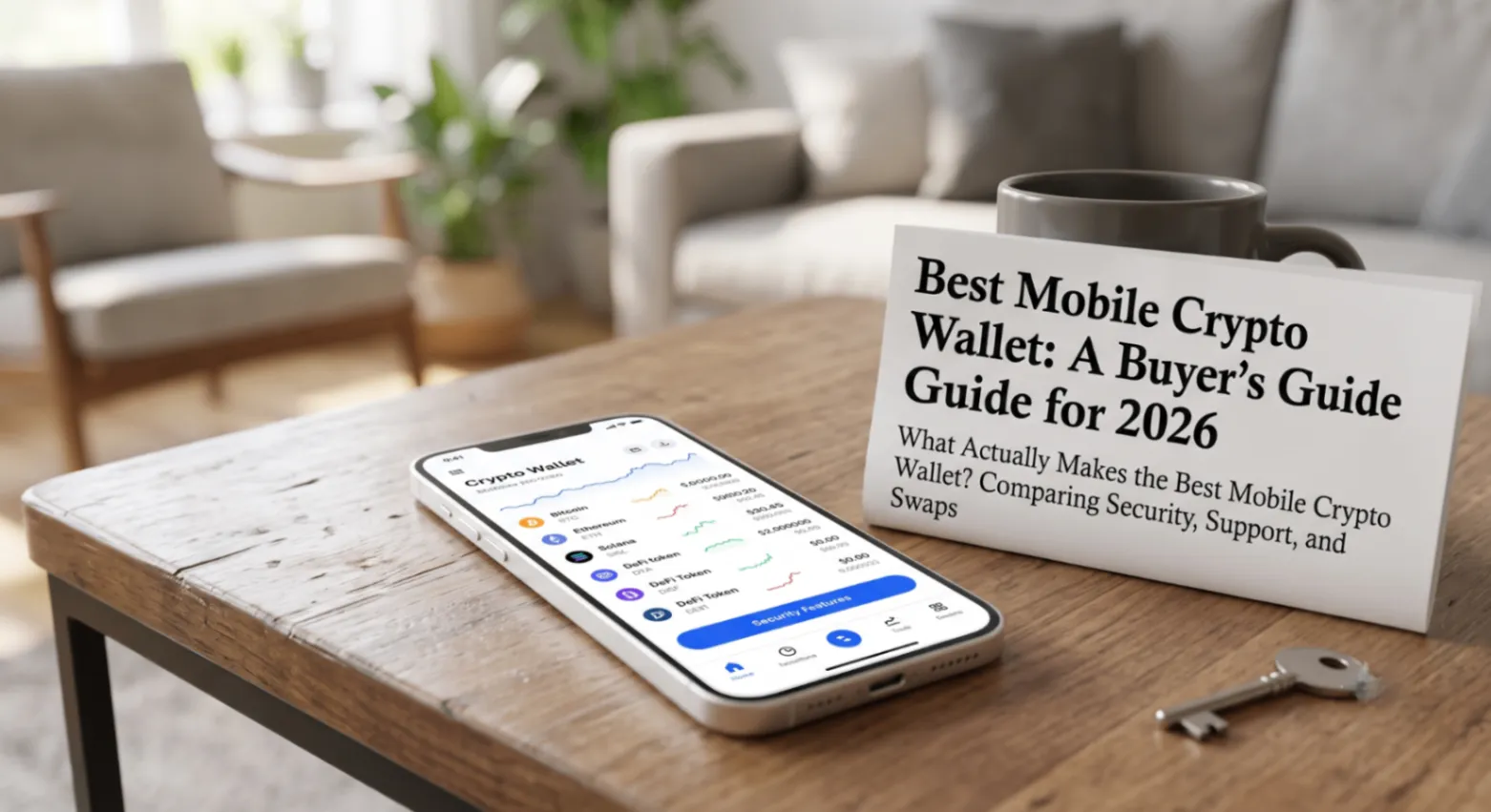
Choosing the best mobile crypto wallet has become a genuinely important decision, not a trivial app-store download. As more of daily crypto activity, from checking balances to executing trades to interacting with decentralized apps, happens on smartphones, the wallet you choose determines your security, convenience, and overall experience with the entire crypto ecosystem. This buyer’s guide breaks down exactly what to evaluate before committing to a mobile crypto wallet app.
Why the Mobile Wallet Decision Matters More Than It Used To
Early crypto wallets were largely desktop-first, with mobile apps treated as a secondary convenience. That’s no longer the case. Mobile devices are now the primary interface for most crypto users worldwide, and mobile wallet apps have evolved to match, offering full transaction capability, DeFi access, and multi-chain support that once required a desktop setup.
This shift raises the stakes on choosing the right app. A poorly designed mobile wallet can expose you to phishing risks, confusing transaction flows that lead to costly mistakes, or limited functionality that forces you to juggle multiple apps unnecessarily.
Core Criteria for Evaluating a Mobile Crypto Wallet
1. Non-Custodial Architecture
The single most important factor is whether the wallet is non-custodial, meaning private keys are generated and stored directly on your device rather than on a company’s servers. This determines whether you have true ownership of your assets. Our guide on what a non-custodial wallet is covers why this distinction matters so much.
2. Multi-Chain and Multi-Asset Support
A genuinely useful mobile wallet should support multiple blockchains natively, not just multiple tokens on a single chain. This becomes increasingly important as your portfolio diversifies across different networks. Our detailed breakdown of multi-chain crypto wallets explains what to look for specifically.
3. Security Features Beyond the Basics
Look for biometric authentication (fingerprint or face recognition), PIN-based app locks separate from device-level security, and clear, non-negotiable recovery phrase backup flows during setup. The best mobile wallets make security features intuitive rather than optional add-ons buried in settings menus.
4. Clean, Intuitive Transaction Flow
Sending and receiving crypto should be straightforward, with clear network selection, address verification prompts, and transaction confirmation screens that reduce the risk of costly mistakes like sending assets to the wrong address or network.
5. In-App Swap and Bridge Functionality
The best mobile wallets increasingly integrate swap and cross-chain bridge functionality directly into the app, removing the need to visit external, potentially risky third-party websites for these actions.
6. Responsive Development and Updates
Check how frequently the app is updated, and whether the developer communicates clearly about new features, security patches, and known issues. An actively maintained app is generally a safer long-term choice than one that hasn’t been updated recently.
Mobile Wallet Red Flags to Avoid
Not every app claiming to be a “crypto wallet” deserves your trust. Watch for:
- Unclear custody model. If it’s not immediately clear whether the app is custodial or non-custodial, that’s a transparency red flag.
- No recovery phrase shown during setup. A legitimate non-custodial wallet will always show you a recovery phrase and require confirmation that you’ve backed it up.
- Excessive permissions requests. Be cautious of apps requesting unrelated device permissions unnecessary for wallet functionality.
- Poor app store reviews citing fund loss. While not always definitive, a pattern of complaints about lost funds or unresponsive support is a serious warning sign.
- Unofficial download sources. Always download wallet apps directly from official websites or verified app store listings, never from links shared in unsolicited messages.
Why DokWallet Stands Out as an All-in-One Mobile Option
DokWallet was built specifically as a mobile-first, all-in-one crypto wallet, combining non-custodial security, multi-chain support, and cross-chain functionality within a single app designed for iOS and everyday mobile use. Rather than requiring users to combine multiple specialized apps, DokWallet consolidates wallet management, swapping, and cross-chain transfers into one consistent interface.
For users specifically on Apple devices, our dedicated guide to using DokWallet as a crypto wallet iOS app covers setup and platform-specific features in more depth.
Comparing Use Cases: Who Should Prioritize What
- New crypto users should prioritize simplicity and clear educational onboarding, since mistakes made early, like mismanaging a recovery phrase, tend to be the most costly.
- Active DeFi participants should prioritize multi-chain and cross-chain support, since much of DeFi activity spans multiple networks.
- Long-term holders should prioritize strong security fundamentals and consider pairing a mobile wallet with a hardware wallet for larger balances, while using the mobile app for day-to-day, smaller transactions.
- Frequent cross-border users should prioritize wallets with strong stablecoin and payment functionality, covered in more depth in our guide to paying with a crypto app.
The Growing Role of iOS-Specific Optimization
Apple’s ecosystem has historically imposed stricter app store review requirements on crypto-related apps compared to Android, which has pushed serious wallet developers to prioritize compliance, transparency, and polish specifically for iOS users. A mobile crypto wallet that performs well within Apple’s ecosystem, integrating cleanly with Face ID, respecting iOS design conventions, and maintaining consistent update cadence through the App Store, is often a signal of a more mature, well-resourced development team behind the product. This is one of several reasons iOS users in particular benefit from choosing an app purpose-built for the platform rather than a cross-platform app with a secondary, less-refined iOS experience.
Balancing Convenience and Security on Mobile
Mobile devices are inherently more exposed to theft, loss, and casual access by others compared to a dedicated hardware device kept in a drawer. This makes it worth adopting a tiered approach to mobile wallet usage: keep smaller, actively used balances in your mobile wallet for convenience, while routing larger holdings toward cold storage or a hardware wallet you rarely connect to the internet. This approach lets you enjoy the everyday convenience of mobile crypto management without concentrating your entire net worth behind a single device’s security.
Testing a Wallet Before Committing Meaningful Funds
Before moving significant assets into any new mobile wallet, it’s worth running through a basic trust-building process: install the app, generate a new wallet, send a small test transaction, confirm receipt, and explore the interface thoroughly. This lets you evaluate the actual user experience and confirm the recovery phrase process works as expected, without exposing significant funds to an unfamiliar app.
Frequently Asked Questions
Is a mobile crypto wallet as secure as a hardware wallet?
A well-designed non-custodial mobile wallet offers strong security for everyday use, though hardware wallets add an additional layer of offline protection recommended for larger, long-term holdings.
Can I use the same mobile wallet across multiple devices?
Yes, as long as you have your recovery phrase, you can restore your wallet on a new or additional device using a compatible wallet app.
Do mobile crypto wallets work without an internet connection?
You need an internet connection to broadcast transactions to the blockchain, though you can typically view your stored balances and address information offline in most modern wallet apps.
How many wallets should I realistically use?
Most experienced users eventually settle on one primary all-in-one mobile wallet for daily activity, supplemented by a hardware wallet for larger, long-term holdings, rather than juggling several overlapping mobile apps.
Final Thoughts
Choosing the best mobile crypto wallet comes down to evaluating non-custodial security, multi-chain support, transaction clarity, and ongoing development quality, not just app store ratings or flashy marketing. A wallet that checks all these boxes will serve you reliably as your crypto activity grows and diversifies across networks and use cases.
To see how these features come together in a single all-in-one solution, read our complete DokWallet review, or explore our focused guide on cross-chain transfers if multi-network activity is your primary use case.