Decentralized Wallet vs Custodial Wallet: Which One Should You Choose?
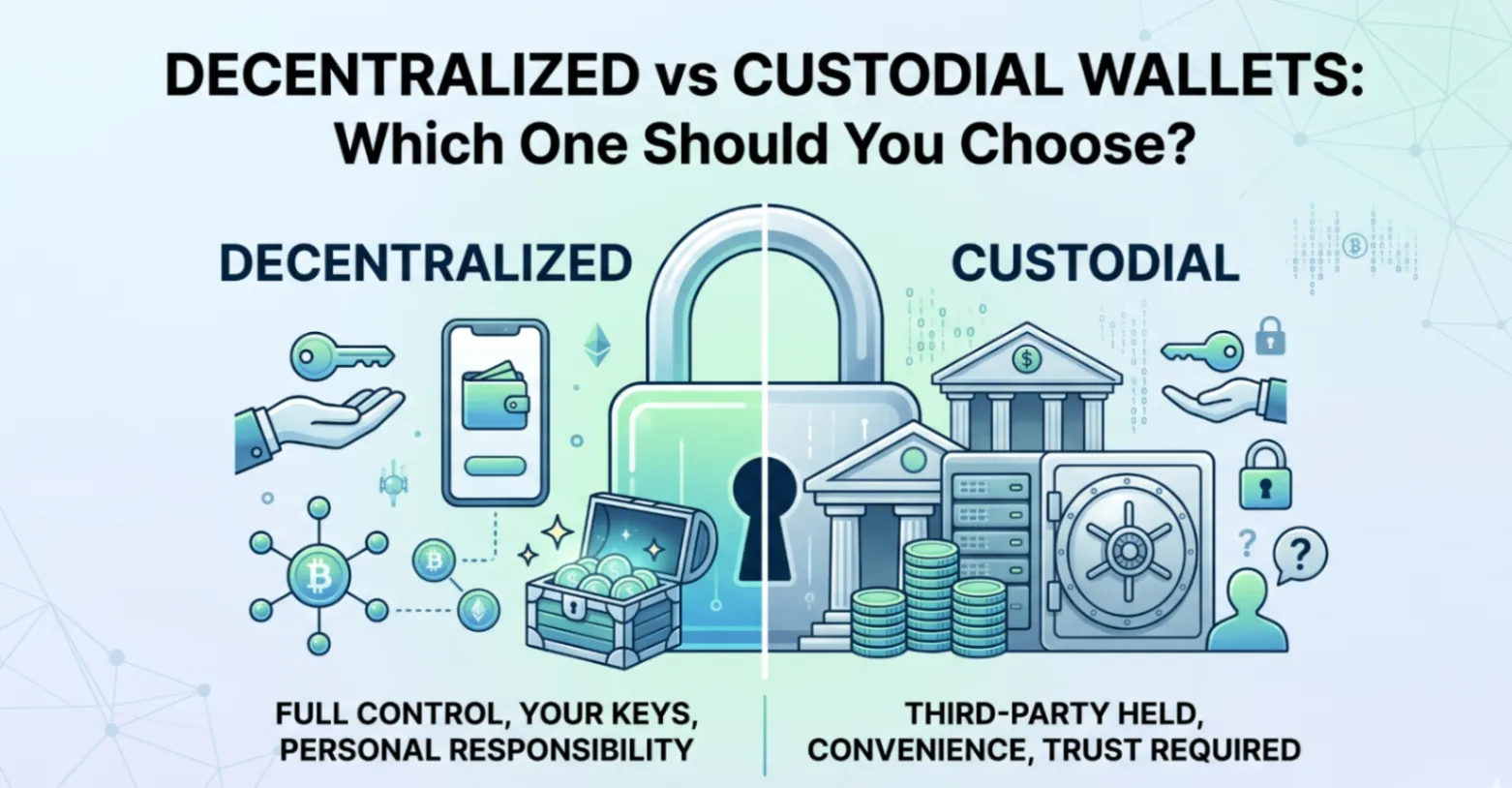
The debate between decentralized and custodial wallets sits at the centre of how most people first interact with crypto. Both models let you store and transact digital assets, but they operate on completely different principles of ownership, security, and control.
This guide breaks down what each model means in practice, who each suits best, and why DOK Wallet takes a clear position on one side of this debate.
Understanding the Custodial Model
A custodial wallet is one where a third party, typically a centralised exchange or a financial platform, holds your private keys on your behalf. When you sign up for a popular crypto exchange and buy assets, you are using a custodial arrangement. The exchange maintains the blockchain addresses, manages the private keys, and grants you access to your balance through their own login system.
This model is familiar. It resembles how traditional banking works. You deposit funds, the institution holds them, and you trust that they will be there when you want to withdraw. For beginners, this familiarity is genuinely comforting.
The Real Cost of Custodial Convenience
Custodial convenience comes with a set of risks that are unique to crypto and significantly more severe than those in traditional banking. Banks are regulated, insured, and have legal obligations to return your funds. Crypto exchanges often lack equivalent protections. When they fail, users typically have no legal recourse.
- Account freezes can prevent withdrawals without notice.
- KYC and compliance checks can lock accounts indefinitely.
- Exchange insolvency means your balance becomes an unsecured claim.
- Data breaches expose your identity and transaction history.
The Decentralized Crypto Wallet Model
A decentralized crypto wallet, also called a non-custodial wallet, stores private keys on the user's own device. No company holds your keys. No platform can freeze your access. Your assets exist at blockchain addresses you control, and only you can authorize transactions from those addresses.
DOK Wallet is a fully decentralized crypto wallet. When you create a wallet, your seed phrase is generated on your device, and the app never transmits it anywhere. You are the sole custodian of your keys from the first second of use.
For a deeper look at how non-custodial wallets work, read our guide to non-custodial crypto wallets.
Key Differences in Practice
The differences between custodial and decentralized wallets become most visible when something goes wrong. If a centralised exchange is hacked, your assets in their custody are at risk. If DOK Wallet's servers were somehow compromised, there would be nothing to take because no user keys are stored there. Each user's assets are held at addresses they alone control.
Similarly, if you lose access to a custodial account, the exchange can verify your identity and restore access. With DOK Wallet, only your seed phrase can restore your wallet. This is a higher level of responsibility but also a higher level of security.
Who Should Use a Decentralized Wallet?
A decentralized wallet like DOK Wallet is the right choice for users who hold crypto with any medium to long-term horizon. It is also necessary for anyone who wants to interact with decentralised applications, participate in DeFi, or transact on chains that centralised exchanges do not fully support.
DOK Wallet is designed to make decentralised wallet ownership accessible to everyday users. The interface is clean, the onboarding guides users through seed phrase security, and multi-chain support means there is rarely a reason to need multiple wallets.
See how DOK Wallet supports iOS and Android users in our iOS wallet guide. For a comprehensive look at all DOK Wallet features, read the full DOK Wallet review.
The Hybrid Approach
Many experienced crypto users keep small amounts on exchanges for trading while holding their core portfolio in a non-custodial wallet. This approach captures the trading convenience of centralised platforms while protecting significant holdings in self-custody. DOK Wallet fits naturally into this model as the secure home for long-term holdings.
Frequently Asked Questions
What is the main difference between a custodial and a decentralized wallet?
A custodial wallet gives a third party control of your private keys. A decentralized wallet gives you sole control. With a decentralized wallet like DOK Wallet, only you can authorize transactions from your addresses.
Can a custodial exchange freeze my funds?
Yes. Custodial exchanges can freeze withdrawals, restrict accounts for compliance reasons, or lose access to your funds entirely if they become insolvent. Several major exchange collapses have resulted in users losing their assets permanently.
Is DOK Wallet custodial or decentralized?
DOK Wallet is fully decentralized. Your seed phrase is generated on your device and never transmitted to DOK Wallet's servers. You are the sole custodian of your private keys from the moment you create your wallet.
Do I need to provide ID to use DOK Wallet?
No. DOK Wallet does not require identity verification. Some third-party providers used for buying crypto within the app may have their own KYC requirements, but the wallet itself has none.
What is the hybrid approach experienced crypto users take?
Many experienced users keep small amounts on exchanges for active trading while holding their core portfolio in a non-custodial wallet. DOK Wallet serves as the secure home for long-term holdings in this model.
Can DOK Wallet be hacked to access my funds?
Because DOK Wallet never stores user private keys on its servers, a compromise of DOK Wallet's infrastructure would expose no user key material. Your funds are held at blockchain addresses you alone control.
Final Thoughts
The choice between custodial and decentralized wallets is ultimately a choice about who controls your assets. Centralised platforms offer convenience; decentralised wallets offer ownership. For anyone who takes their crypto seriously, the case for a non-custodial wallet like DOK Wallet is clear.
Download DOK Wallet and experience true crypto ownership at dokwallet.com.