How to Pay With Crypto: A Practical Step-by-Step Guide for Everyday Use
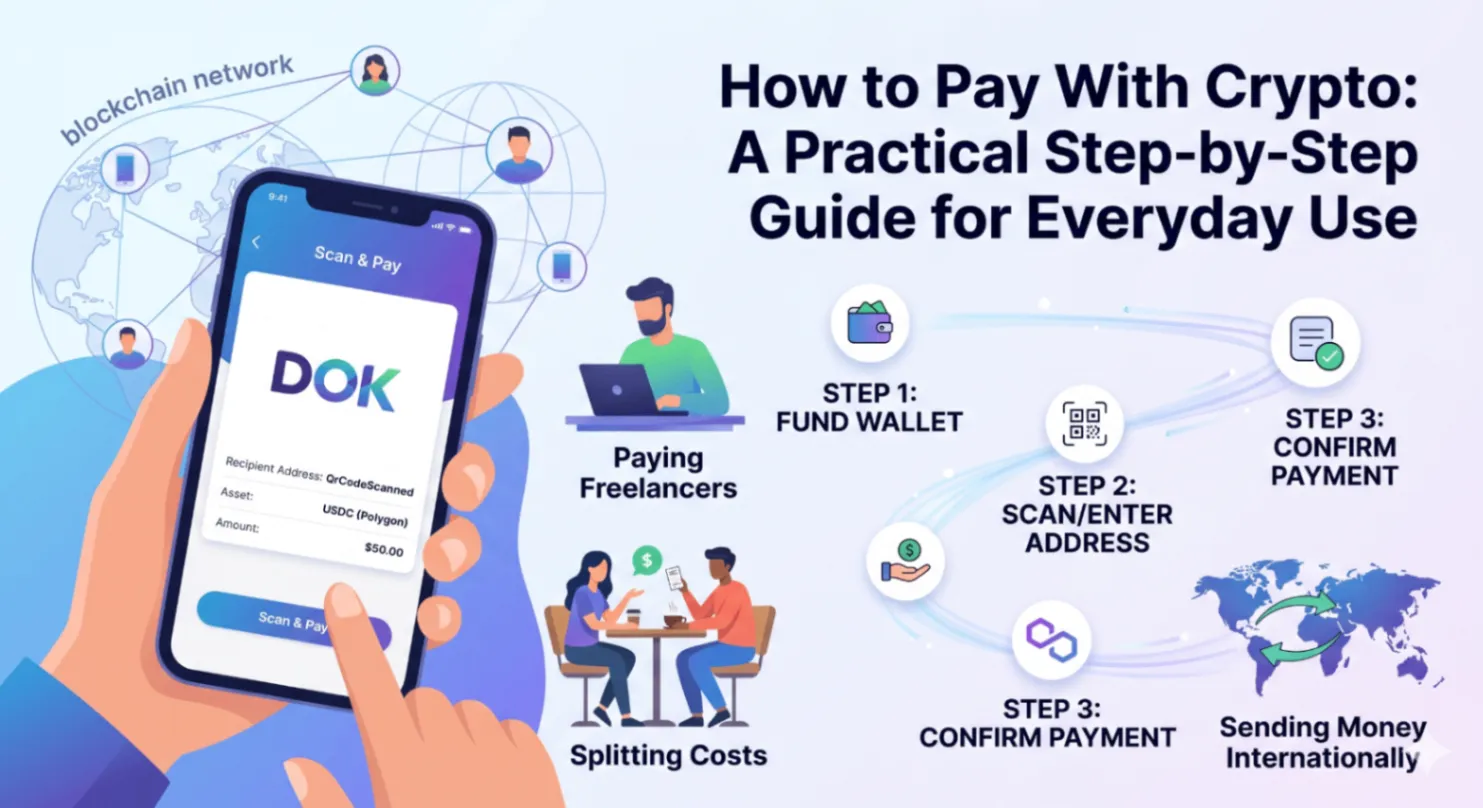
Using crypto for payments is no longer a niche activity reserved for tech enthusiasts. Stablecoins and fast blockchain networks have made crypto payments practical for everyday use, whether you are paying freelancers, splitting costs with friends, or sending money internationally. The key is knowing how to do it correctly.
This guide walks through the practical mechanics of making crypto payments using DOK Wallet, covering everything from setting up your first payment to handling common situations you will encounter.
The Difference Between Paying With Crypto and Paying With Fiat
Traditional payments move through banking rails. Even contactless card payments involve your bank, the merchant's bank, a card network, and sometimes additional processors. Each step takes time and each party may collect a fee. The final settlement between banks often happens days later.
A crypto payment is a direct transfer from your wallet address to the recipient's wallet address, recorded on the blockchain when a miner or validator includes it in a block. There are no intermediaries between you and the recipient. Settlement is final when the transaction achieves sufficient confirmations.
For context on how DOK Wallet manages your wallet addresses, read our non-custodial wallet guide.
Step One: Set Up Your DOK Wallet and Add Funds
Download DOK Wallet from the App Store or Google Play. Create a new wallet and carefully record your twelve-word seed phrase on paper before proceeding. Once your wallet is active, fund it by receiving crypto from another wallet or purchasing through an integrated fiat onramp if available in your region.
For payment use cases, a stablecoin like USDC is the most practical choice. It eliminates the exchange-rate volatility that makes paying with Bitcoin or Ethereum unpredictable. Hold USDC in DOK Wallet on a low-fee network like Polygon or BNB Chain for the most cost-effective everyday payments.
For why stablecoins are the right payment tool, read our cross-border payments guide.
Step Two: Get the Recipient's Wallet Address
Every crypto payment requires the recipient's wallet address for the specific asset and network you are using. This is critical: sending USDC on Ethereum to an address the recipient only monitors on BNB Chain means your payment arrives at an address they may not be watching.
Always confirm both the asset and the network with the recipient before sending. Ask for their address in writing and double-check the first and last four characters against what they send you. Blockchain transactions are irreversible. Sending to the wrong address is a permanent loss.
Step Three: Initiate the Payment in DOK Wallet
In DOK Wallet, tap the send button from the main dashboard. Select the asset you are sending (for example, USDC on Polygon). Enter or paste the recipient's wallet address. Review the auto-populated address carefully. Enter the amount. Review the network fee estimate shown before you confirm.
Network fees vary by blockchain. Polygon and BNB Chain fees are typically fractions of a cent. Ethereum fees can range from a few cents to several dollars depending on network congestion. DOK Wallet shows you the fee before you approve, so there are no surprises.
Step Four: Confirm and Track
After reviewing the recipient address, amount, and fee, confirm the transaction. DOK Wallet signs the transaction with your private key on your device and broadcasts it to the network. You will see a transaction ID immediately. This ID can be used to track your payment on a blockchain explorer for the relevant network.
For most low-fee networks, the recipient will see the incoming transaction within seconds and have confirmed access within a minute. For Bitcoin and Ethereum, allow a few minutes to an hour depending on current network load.
Using DOK Wallet as a Pay With Crypto App for Business
Freelancers and small businesses can use DOK Wallet as a pay with crypto app by sharing their wallet address with clients as a payment method. Including your wallet address on invoices, alongside traditional payment methods, gives clients the option to pay in crypto without requiring any change to your existing billing process.
Stablecoin payments received in DOK Wallet hold their value in dollar terms, making them practical for business use where currency stability matters. Conversion to local currency can happen when needed, rather than being forced by volatile price movements.
For multi-chain stablecoin management across payment networks, read our multi-chain wallet guide. For a full review of DOK Wallet's payment features, see our comprehensive wallet review.
Common Mistakes to Avoid When Paying With Crypto
- Sending on the wrong network: always confirm network and asset with the recipient.
- Not verifying the full address: check more than just the first few characters.
- Ignoring fee estimates: understand the total cost before confirming.
- Using volatile crypto for fixed-price payments: prefer stablecoins for predictable value.
- Sending a full amount without a small test first: for large payments, test with a small amount.
Frequently Asked Questions
What do I need to make a crypto payment?
You need DOK Wallet installed with a funded balance, the recipient's wallet address for the correct asset and network, and enough of the network's native token to cover the transaction fee. For most payments, USDC on a low-fee network like Polygon covers all three requirements cheaply.
How do I find my wallet address to share with a sender?
In DOK Wallet, tap the receive button, select the asset and network you want to receive on, and your wallet address is displayed as both text and a QR code. Share either with the sender.
What happens if I send crypto to the wrong address?
Blockchain transactions are irreversible. Sending to the wrong address results in a permanent loss of funds with no recovery option. Always double-check the recipient's full address, particularly the first and last several characters, before confirming any transaction.
What are network fees and who pays them?
Network fees are small amounts paid to the blockchain network — miners or validators — to include your transaction in a block. They are not collected by DOK Wallet. DOK Wallet shows the estimated fee before you confirm any transaction so there are no surprises.
Which cryptocurrency is best for everyday payments?
Stablecoins like USDC or USDT on low-fee networks such as Polygon or BNB Chain are the most practical for everyday payments. They combine the speed and low cost of crypto with dollar-value stability, making them suitable for fixed-price transactions.
How do I use DOK Wallet to receive business payments?
Share your relevant wallet address with clients as a payment method. You can include it on invoices alongside traditional payment options. Stablecoin payments received in DOK Wallet hold their value in dollar terms, making them practical for business use.
Final Thoughts
Paying with crypto is now fast, cheap, and practical for everyday use when you have the right tools. DOK Wallet provides a clean, non-custodial payment experience with multi-chain stablecoin support and a straightforward sending interface that any user can navigate confidently.
Download DOK Wallet and start making crypto payments at dokwallet.com.