
Multi-Chain Crypto Wallets Explained: Managing Every Blockchain in One Place
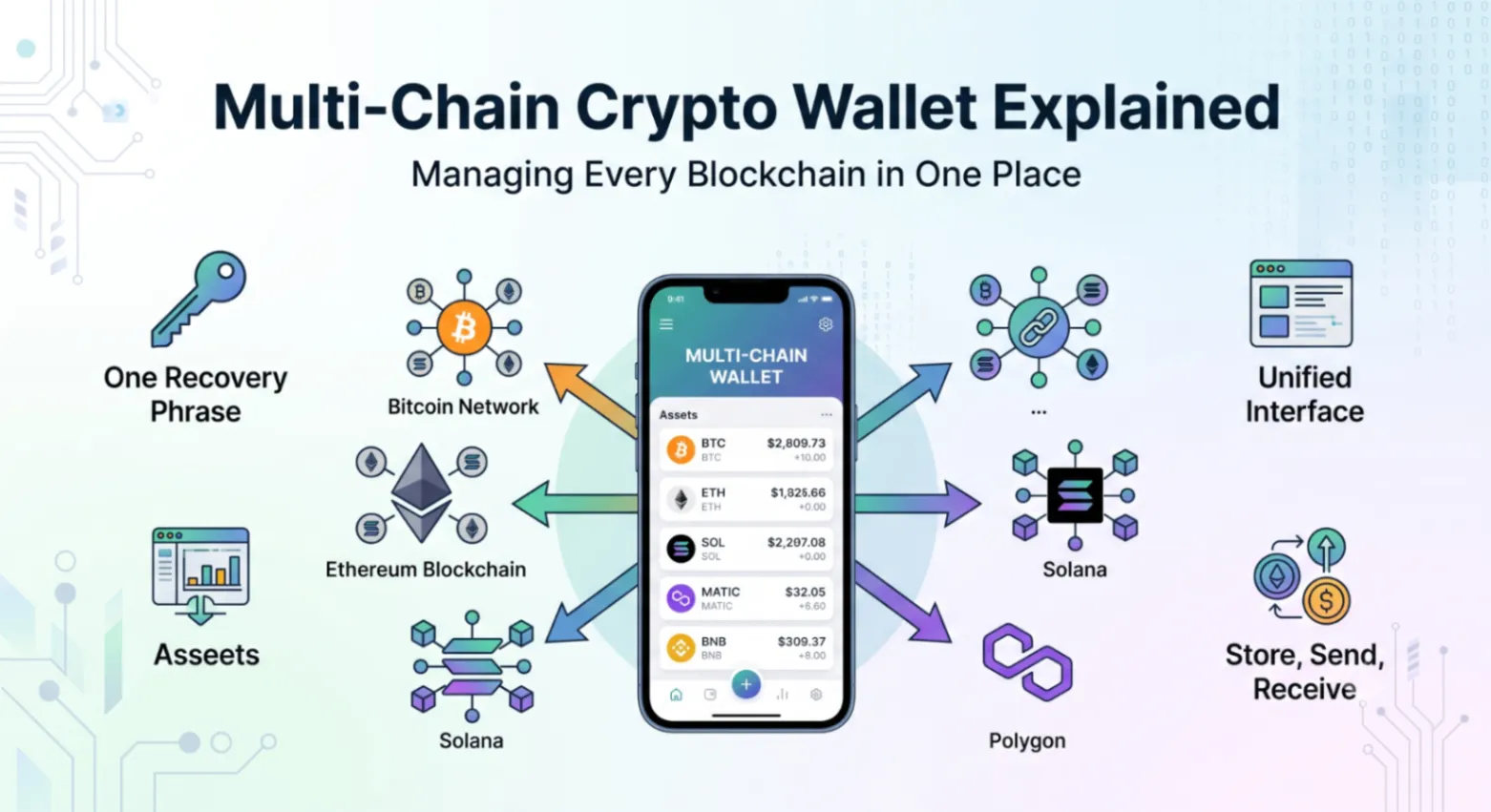
As crypto has grown from a single-network experiment into an ecosystem of dozens of active blockchains, a new problem has emerged for everyday users: fragmentation. Assets on Ethereum, Bitcoin, Solana, and other networks often require separate wallets, separate recovery phrases, and separate interfaces to manage. A multi-chain crypto wallet solves this by letting you store, send, receive, and manage assets across multiple blockchains from a single application. This guide explains exactly how multi-chain wallets work, why they matter, and what to look for when choosing one.
What Is a Multi-Chain Crypto Wallet?
A multi-chain wallet is a non-custodial wallet designed to support more than one blockchain network within the same app. Instead of downloading a separate wallet for every network you use, a multi-chain wallet generates and manages distinct addresses for each supported chain under one unified interface, often controlled by a single recovery phrase or a small set of linked seed phrases.
This is different from a multi-currency wallet that only supports tokens native to a single chain (for example, various ERC-20 tokens on Ethereum). A true multi-chain wallet supports fundamentally different blockchain architectures, letting you hold Bitcoin, Ethereum-based assets, and other Layer 1 tokens simultaneously, each interacting with its native network correctly.
Why Multi-Chain Support Matters
The crypto ecosystem is no longer dominated by a single blockchain. Different networks have carved out different strengths: some prioritize low transaction fees, others prioritize speed, and others focus on specific use cases like decentralized finance or gaming. As a result, most active crypto users end up holding assets across at least two or three different chains within their first year of serious involvement.
Without a multi-chain wallet, this means:
- Installing and maintaining multiple separate wallet apps
- Tracking multiple recovery phrases, multiplying security risk
- Manually calculating total portfolio value across disconnected interfaces
- Increased risk of sending assets to an incompatible network by mistake
A multi-chain wallet consolidates all of this into one place, reducing both the operational hassle and the security surface area you need to manage.
How DokWallet Approaches Multi-Chain Management
DokWallet is built from the ground up as a multi-chain, multi-blockchain wallet, meaning a single wallet setup gives you access to assets across supported networks without needing separate installations. The interface groups your holdings by network while still giving you a consolidated portfolio view, so you can see your total balance at a glance while still drilling into chain-specific details when needed.
This architecture also matters for cross-chain crypto wallet functionality, since moving assets between networks becomes far more intuitive when both the sending and receiving environments live inside the same app.
Key Features to Look For in a Multi-Chain Wallet
When evaluating any wallet marketed as multi-chain, look beyond the marketing claim and check for:
- Native network support, not just wrapped or bridged token representations for every listed chain.
- Accurate gas fee estimation per network, since fee structures vary significantly between chains.
- Unified portfolio tracking that aggregates value across all supported networks in your preferred currency.
- Built-in swap functionality for exchanging assets across chains without leaving the app.
- Clear network selection during send transactions, to avoid the common and costly mistake of sending assets on the wrong network.
Common Mistakes When Using Multi-Chain Wallets
Even with a well-designed multi-chain wallet, a few mistakes account for the majority of user errors:
- Sending to the wrong network. Many blockchain addresses look similar across different networks. Always double-check that the receiving network matches the sending network before confirming a transaction.
- Assuming all coins exist on all chains. Not every token is available on every network. Verify that the asset you’re sending or receiving actually exists on the specific chain you’ve selected.
- Ignoring network-specific fees. Gas fees vary dramatically between networks. A transaction that costs cents on one chain might cost significantly more on another during periods of network congestion.
Multi-Chain Wallets and Everyday Usability
Beyond the technical benefits, multi-chain support has a real impact on daily usability. Instead of switching between four or five different apps to check balances or move funds, everything lives in one dashboard. This is particularly valuable for mobile users who want a genuinely all-in-one crypto wallet experience rather than a collection of single-purpose tools.
For anyone managing a portfolio that spans multiple asset types, our guide to the best mobile crypto wallet options covers how multi-chain support factors into the broader mobile wallet decision.
Who Actually Needs a Multi-Chain Wallet?
Not every crypto user needs multi-chain support on day one. If you hold a single asset on a single network and have no plans to diversify, a simpler single-chain wallet may serve you fine. But the moment you start exploring different ecosystems, whether that’s experimenting with a new Layer 1 network, participating in an airdrop on an emerging chain, or simply diversifying your long-term holdings, multi-chain support quickly becomes essential rather than optional.
This is especially true for users who got started during a period when a single blockchain dominated their attention, then gradually expanded into other ecosystems as opportunities and interests grew. Retroactively consolidating a scattered collection of single-chain wallets into one multi-chain solution is a common turning point, and one that most experienced crypto users go through at some stage of their journey.
Multi-Chain Wallets and Portfolio Visibility
One underrated benefit of multi-chain wallets is the clarity they bring to portfolio tracking. When your assets are spread across separate apps, getting an accurate picture of your total crypto net worth requires manually checking each wallet and converting values yourself. A unified multi-chain dashboard removes this friction entirely, showing your combined holdings in one place, updated in real time as market prices shift. For anyone managing a portfolio across three or more networks, this alone can justify switching to a consolidated wallet.
Multi-Chain vs. Cross-Chain: Clearing Up the Confusion
These two terms are often used interchangeably, but they describe different capabilities. A multi-chain wallet simply supports holding assets on multiple blockchains within a single app. Cross-chain functionality goes a step further, allowing you to actually move or swap assets between those different networks, often via bridge technology. A wallet can be multi-chain without being cross-chain, though the best modern wallets, including DokWallet, aim to offer both. For a deeper breakdown of how bridging works, see our dedicated guide on cross-chain crypto transfers.
Security Considerations for Multi-Chain Wallets
Managing more networks from a single app does introduce a broader attack surface in theory, which makes strong fundamentals even more important. This includes securely backing up your recovery phrase, verifying network details before every transaction, and understanding how your specific wallet segregates keys or address derivation across chains. Our full security best practices guide covers these fundamentals in more depth, and applies directly to multi-chain wallet users.
Frequently Asked Questions
Does a multi-chain wallet use one recovery phrase for everything?
In most modern multi-chain wallets, yes, a single recovery phrase can restore access to all supported networks, simplifying backup while still maintaining separate addresses per chain.
Can I add support for a new blockchain later?
Many multi-chain wallets add network support through app updates, meaning your existing wallet can gain access to new chains over time without requiring a new setup.
Is a multi-chain wallet more expensive to use than single-chain wallets?
No. Network fees are determined by the blockchain itself, not the wallet. A multi-chain wallet doesn’t add extra cost beyond standard network transaction fees.
How do I know if an asset I’m sending is compatible with the destination network?
Always confirm that the specific token exists natively on the network you’ve selected before sending. Reputable multi-chain wallets flag network mismatches automatically, but manually verifying the receiving address and network is still a good habit for any transaction involving unfamiliar assets or new chains.
Final Thoughts
As the number of active, relevant blockchains continues to grow, multi-chain wallets have shifted from a nice-to-have feature to a practical necessity for anyone holding a diversified crypto portfolio. Consolidating your assets into a single, well-designed multi-chain interface reduces both the operational friction and the security risks of managing multiple separate wallets.
To go deeper on moving assets between networks, read our guide on cross-chain transfers and bridge technology. And if you’re curious how multi-chain support fits into DokWallet’s broader feature set, our complete DokWallet review walks through everything the app offers in one place.